Mailbox picture purely illustrative and not directly related to the story.
Sigh.
When I pulled out yesterday morning for the first of the day’s errands I saw that our roadside mailbox was gone. Well, the post, about 3′ of it, was still there but the crossbeam and box were g. o. n. e. Was there day before yesterday when I went to check mail on returning home from work in the evening.
Well, later in the day I went shopping for a replacement. Figured to get one of those plastic ones that just fit over a post embedded in the ground (since I happened to have one in place). Local big box hardware store didn’t have one. Walmart next to it didn’t carry mailboxes. I check Walmarts web site and, oh, they had them down at a place not too far from where I live. Just to make sure, I put in an order with “pick up in the store” as the delivery method. I figured I’d just be able to go over that night or the next day and…”we estimate your order will be ready Tuesday, November 26th.”
Double sigh.
I tried to cancel the order (thinking I’ll just go in person and try my luck). No confirmation of the cancellation and I didn’t want to buy two (checked the card provider online and, yep, the card had been billed so I’d paid for the ordered mailbox). So now I have to wait until either the one I’ve ordered is ready for pickup or until I get a confirmation that the order has been cancelled and the money refunded.
On the plus side, such as it is, I found the old mailbox itself on my porch later that evening. At least the person who broke it (or perhaps some kindly passerby later) put it up there out of the way for all the good that did.
This was annoying.
For comparison, there was a time when I knocked over somebody’s mailbox. (Then wife and daughter had just left on an extended overseas trip so I was more than a little stressed. I never handled separation well until…well, that’s a story for another time and probably not for a public forum.) I went and talked to the owner (who was home), I was heading out for a trip and couldn’t fully make it right at the time but MadMike and I propped the post and box up on a temporary basis so the person could still get mail and when we returned from the trip I bought a new post and we installed it in place of the one I’d broken by backing into it with my Explorer.
This work is in the public domain in the United States because it was published (or registered with the U.S. Copyright Office) before January 1, 1924.
The Havamal is a collection of sayings attributed to Odin, Lord of Battles, Most Wise and Most High. Much of it is advice on wisdom. Some of what is said here is specific to the time and place of Medieval Scandinavia and needs to be considered with that in mind. But much of it if well-nigh universal in application. Lend ear all who will hear.
Havamal.
1.
At every door-way,
ere one enters,
one should spy round,
one should pry round
for uncertain is the witting
that there be no foeman sitting,
within, before one on the floor
2.
Hail, ye Givers! a guest is come;
say! where shall he sit within?
Much pressed is he who fain on the hearth
would seek for warmth and weal.
3.
He hath need of fire, who now is come,
numbed with cold to the knee;
food and clothing the wanderer craves
who has fared o’er the rimy fell.
4.
He craves for water, who comes for refreshment,
drying and friendly bidding,
marks of good will, fair fame if ’tis won,
and welcome once and again.
5.
He hath need of his wits who wanders wide,
aught simple will serve at home;
but a gazing-stock is the fool who sits
mid the wise, and nothing knows.
6.
Let no man glory in the greatness of his mind,
but rather keep watch o’er his wits.
Cautious and silent let him enter a dwelling;
to the heedful comes seldom harm,
for none can find a more faithful friend
than the wealth of mother wit.
7.
Let the wary stranger who seeks refreshment
keep silent with sharpened hearing;
with his ears let him listen, and look with his eyes;
thus each wise man spies out the way.
8.
Happy is he who wins for himself
fair fame and kindly words;
but uneasy is that which a man doth own
while it lies in another’s breast.
9.
Happy is he who hath in himself
praise and wisdom in life;
for oft doth a man ill counsel get
when ’tis born in another’s breast.
10.
A better burden can no man bear
on the way than his mother wit;
’tis the refuge of the poor, and richer it seems
than wealth in a world untried.
11.
A better burden can no man bear
on the way than his mother wit:
and no worse provision can he carry with him
than too deep a draught of ale.
12.
Less good than they say for the sons of men
is the drinking oft of ale:
for the more they drink, the less can they think
and keep a watch o’er their wits.
13.
A bird of Unmindfulness flutters o’er ale feasts,
wiling away men’s wits:
with the feathers of that fowl I was fettered once
in the garths of Gunnlos below.
14.
Drunk was I then, I was over drunk
in that crafty Jötun’s court.
But best is an ale feast when man is able
to call back his wits at once.
15.
Silent and thoughtful and bold in strife
the prince’s bairn should be.
Joyous and generous let each man show him
until he shall suffer death.
16.
A coward believes he will ever live
if he keep him safe from strife:
but old age leaves him not long in peace
though spears may spare his life.
17.
A fool will gape when he goes to a friend,
and mumble only, or mope;
but pass him the ale cup and all in a moment
the mind of that man is shown.
18.
He knows alone who has wandered wide,
and far has fared on the way,
what manner of mind a man doth own
who is wise of head and heart.
19.
Keep not the mead cup but drink thy measure;
speak needful words or none:
none shall upbraid thee for lack of breeding
if soon thou seek’st thy rest.
20.
A greedy man, if he be not mindful,
eats to his own life’s hurt:
oft the belly of the fool will bring him to scorn
when he seeks the circle of the wise.
21.
Herds know the hour of their going home
and turn them again from the grass;
but never is found a foolish man
who knows the measure of his maw.
22.
The miserable man and evil minded
makes of all things mockery,
and knows not that which he best should know,
that he is not free from faults.
23.
The unwise man is awake all night,
and ponders everything over;
when morning comes he is weary in mind,
and all is a burden as ever.
24.
The unwise man weens all who smile
and flatter him are his friends,
nor notes how oft they speak him ill
when he sits in the circle of the wise.
25.
The unwise man weens all who smile
and flatter him are his friends;
but when he shall come into court he shall find
there are few to defend his cause.
26.
The unwise man thinks all to know,
while he sits in a sheltered nook;
but he knows not one thing, what he shall answer,
if men shall put him to proof.
27.
For the unwise man ’tis best to be mute
when he come amid the crowd,
for none is aware of his lack of wit
if he wastes not too many words;
for he who lacks wit shall never learn
though his words flow ne’er so fast.
28.
Wise he is deemed who can question well,
and also answer back:
the sons of men can no secret make
of the tidings told in their midst.
29.
Too many unstable words are spoken
by him who ne’er holds his peace;
the hasty tongue sings its own mishap
if it be not bridled in.
30.
Let no man be held as a laughing-stock,
though he come as guest for a meal:
wise enough seem many while they sit dry-skinned
and are not put to proof.
31.
A guest thinks him witty who mocks at a guest
and runs from his wrath away;
but none can be sure who jests at a meal
that he makes not fun among foes.
32.
Oft, though their hearts lean towards one another,
friends are divided at table;
ever the source of strife ’twill be,
that guest will anger guest.
33.
A man should take always his meals betimes
unless he visit a friend,
or he sits and mopes, and half famished seems,
and can ask or answer nought.
34.
Long is the round to a false friend leading,
e’en if he dwell on the way:
but though far off fared, to a faithful friend
straight are the roads and short.
35.
A guest must depart again on his way,
nor stay in the same place ever;
if he bide too long on another’s bench
the loved one soon becomes loathed.
36.
One’s own house is best, though small it may be;
each man is master at home;
though he have but two goats and a bark-thatched hut
’tis better than craving a boon.
37.
One’s own house is best, though small it may be,
each man is master at home;
with a bleeding heart will he beg, who must,
his meat at every meal.
38.
Let a man never stir on his road a step
without his weapons of war;
for unsure is the knowing when need shall arise
of a spear on the way without.
39.
I found none so noble or free with his food,
who was not gladdened with a gift,
nor one who gave of his gifts such store
but he loved reward, could he win it.
40.
Let no man stint him and suffer need
of the wealth he has won in life;
oft is saved for a foe what was meant for a friend,
and much goes worse than one weens.
41.
With raiment and arms shall friends gladden each other,
so has one proved oneself;
for friends last longest, if fate be fair
who give and give again.
42.
To his friend a man should bear him as friend,
and gift for gift bestow,
laughter for laughter let him exchange,
but leasing pay for a lie.
43.
To his friend a man should bear him as friend,
to him and a friend of his;
but let him beware that he be not the friend
of one who is friend to his foe.
44.
Hast thou a friend whom thou trustest well,
from whom thou cravest good?
Share thy mind with him, gifts exchange with him,
fare to find him oft.
45.
But hast thou one whom thou trustest ill
yet from whom thou cravest good?
Thou shalt speak him fair, but falsely think,
and leasing pay for a lie.
46.
Yet further of him whom thou trusted ill,
and whose mind thou dost misdoubt;
thou shalt laugh with him but withhold thy thought,
for gift with like gift should be paid.
47.
Young was I once, I walked alone,
and bewildered seemed in the way;
then I found me another and rich I thought me,
for man is the joy of man.
48.
Most blest is he who lives free and bold
and nurses never a grief,
for the fearful man is dismayed by aught,
and the mean one mourns over giving.
49.
My garments once I gave in the field
to two land-marks made as men;
heroes they seemed when once they were clothed;
’tis the naked who suffer shame!
50.
The pine tree wastes which is perched on the hill,
nor bark nor needles shelter it;
such is the man whom none doth love;
for what should he longer live?
51.
Fiercer than fire among ill friends
for five days love will burn;
bun anon ’tis quenched, when the sixth day comes,
and all friendship soon is spoiled.
52.
Not great things alone must one give to another,
praise oft is earned for nought;
with half a loaf and a tilted bowl
I have found me many a friend.
53.
Little the sand if little the seas,
little are minds of men,
for ne’er in the world were all equally wise,
’tis shared by the fools and the sage.
54.
Wise in measure let each man be;
but let him not wax too wise;
for never the happiest of men is he
who knows much of many things.
55.
Wise in measure should each man be;
but let him not wax too wise;
seldom a heart will sing with joy
if the owner be all too wise.
56.
Wise in measure should each man be,
but ne’er let him wax too wise:
who looks not forward to learn his fate
unburdened heart will bear.
57.
Brand kindles from brand until it be burned,
spark is kindled from spark,
man unfolds him by speech with man,
but grows over secret through silence.
58.
He must rise betimes who fain of another
or life or wealth would win;
scarce falls the prey to sleeping wolves,
or to slumberers victory in strife.
59.
He must rise betimes who hath few to serve him,
and see to his work himself;
who sleeps at morning is hindered much,
to the keen is wealth half-won.
60.
Of dry logs saved and roof-bark stored
a man can know the measure,
of fire-wood too which should last him out
quarter and half years to come.
61.
Fed and washed should one ride to court
though in garments none too new;
thou shalt not shame thee for shoes or breeks,
nor yet for a sorry steed.
62.
Like an eagle swooping over old ocean,
snatching after his prey,
so comes a man into court who finds
there are few to defend his cause.
63.
Each man who is wise and would wise be called
must ask and answer aright.
Let one know thy secret, but never a second, —
if three a thousand shall know.
64.
A wise counselled man will be mild in bearing
and use his might in measure,
lest when he come his fierce foes among
he find others fiercer than he.
65.
Each man should be watchful and wary in speech,
and slow to put faith in a friend.
for the words which one to another speaks
he may win reward of ill.
66.
At many a feast I was far too late,
and much too soon at some;
drunk was the ale or yet unserved:
never hits he the joint who is hated.
67.
Here and there to a home I had haply been asked
had I needed no meat at my meals,
or were two hams left hanging in the house of that friend
where I had partaken of one.
68.
Most dear is fire to the sons of men,
most sweet the sight of the sun;
good is health if one can but keep it,
and to live a life without shame.
69.
Not reft of all is he who is ill,
for some are blest in their bairns,
some in their kin and some in their wealth,
and some in working well.
70.
More blest are the living than the lifeless,
’tis the living who come by the cow;
I saw the hearth-fire burn in the rich man’s hall
and himself lying dead at the door.
71.
The lame can ride horse, the handless drive cattle,
the deaf one can fight and prevail,
’tis happier for the blind than for him on the bale-fire,
but no man hath care for a corpse.
72.
Best have a son though he be late born
and before him the father be dead:
seldom are stones on the wayside raised
save by kinsmen to kinsmen.
73.
Two are hosts against one, the tongue is the head’s bane,
‘neath a rough hide a hand may be hid;
he is glad at nightfall who knows of his lodging,
short is the ship’s berth,
and changeful the autumn night,
much veers the wind ere the fifth day
and blows round yet more in a month.
74.
He that learns nought will never know
how one is the fool of another,
for if one be rich another is poor
and for that should bear no blame.
75.
Cattle die and kinsmen die,
thyself too soon must die,
but one thing never, I ween, will die, —
fair fame of one who has earned.
76.
Cattle die and kinsmen die,
thyself too soon must die,
but one thing never, I ween, will die, —
the doom on each one dead.
77.
Full-stocked folds had the Fatling’s sons,
who bear now a beggar’s staff:
brief is wealth, as the winking of an eye,
most faithless ever of friends.
78.
If haply a fool should find for himself
wealth or a woman’s love,
pride waxes in him but wisdom never
and onward he fares in his folly.
79.
All will prove true that thou askest of runes —
those that are come from the gods,
which the high Powers wrought, and which Odin painted:
then silence is surely best.
80.
Praise day at even, a wife when dead,
a weapon when tried, a maid when married,
ice when ’tis crossed, and ale when ’tis drunk.
81.
Hew wood in wind, sail the seas in a breeze,
woo a maid in the dark, — for day’s eyes are many, —
work a ship for its gliding, a shield for its shelter,
a sword for its striking, a maid for her kiss;
82.
Drink ale by the fire, but slide on the ice;
buy a steed when ’tis lanky, a sword when ’tis rusty;
feed thy horse neath a roof, and thy hound in the yard.
83.
The speech of a maiden should no man trust
nor the words which a woman says;
for their hearts were shaped on a whirling wheel
and falsehood fixed in their breasts.
84.
Breaking bow, or flaring flame,
ravening wolf, or croaking raven,
routing swine, or rootless tree,
waxing wave, or seething cauldron,
85.
flying arrows, or falling billow,
ice of a nighttime, coiling adder,
woman’s bed-talk, or broken blade,
play of bears or a prince’s child,
86.
sickly calf or self-willed thrall,
witch’s flattery, new-slain foe,
brother’s slayer, though seen on the highway,
half burned house, or horse too swift —
be never so trustful as these to trust.
87.
Let none put faith in the first sown fruit
nor yet in his son too soon;
whim rules the child, and weather the field,
each is open to chance.
88.
Like the love of women whose thoughts are lies
is the driving un-roughshod o’er slippery ice
of a two year old, ill-tamed and gay;
or in a wild wind steering a helmless ship,
or the lame catching reindeer in the rime-thawed fell.
89.
Now plainly I speak, since both I have seen;
unfaithful is man to maid;
we speak them fairest when thoughts are falsest
and wile the wisest of hearts.
90.
— Let him speak soft words and offer wealth
who longs for a woman’s love,
praise the shape of the shining maid —
he wins who thus doth woo.
91.
— Never a whit should one blame another
whom love hath brought into bonds:
oft a witching form will fetch the wise
which holds not the heart of fools.
92.
Never a whit should one blame another
for a folly which many befalls;
the might of love makes sons of men
into fools who once were wise.
93.
The mind knows alone what is nearest the heart
and sees where the soul is turned:
no sickness seems to the wise so sore
as in nought to know content.
94.
This once I felt when I sat without
in the reeds, and looked for my love;
body and soul of me was that sweet maiden
yet never I won her as wife.
95.
Billing’s daughter I found on her bed,
fairer than sunlight sleeping,
and the sweets of lordship seemed to me nought,
save I lived with that lovely form.
96.
“Yet nearer evening come thou, Odin,
if thou wilt woo a maiden:
all were undone save two knew alone
such a secret deed of shame.”
97.
So away I turned from my wise intent,
and deemed my joy assured,
for all her liking and all her love
I weened that I yet should win.
98.
When I came ere long the war troop bold
were watching and waking all:
with burning brands and torches borne
they showed me my sorrowful way.
99.
Yet nearer morning I went, once more, —
the housefolk slept in the hall,
but soon I found a barking dog
tied fast to that fair maid’s couch.
100.
Many a sweet maid when one knows her mind
is fickle found towards men:
I proved it well when that prudent lass
I sought to lead astray:
shrewd maid, she sought me with every insult
and I won therewith no wife.
101.
In thy home be joyous and generous to guests
discreet shalt thou be in thy bearing,
mindful and talkative, wouldst thou gain wisdom,
oft making me mention of good.
He is “Simpleton” named who has nought to say,
for such is the fashion of fools.
102.
I sought that old Jötun, now safe am I back,
little served my silence there;
but whispering many soft speeches I won
my desire in Suttung’s halls.
103.
I bored me a road there with Rati’s tusk
and made room to pass through the rock;
while the ways of the Jötuns stretched over and under,
I dared my life for a draught.
104.
‘Twas Gunnlod who gave me on a golden throne
a draught of the glorious mead,
but with poor reward did I pay her back
for her true and troubled heart.
105.
In a wily disguise I worked my will;
little is lacking to the wise,
for the Soul-stirrer now, sweet Mead of Song,
is brought to men’s earthly abode.
106.
I misdoubt me if ever again I had come
from the realms of the Jötun race,
had I not served me of Gunnlod, sweet woman,
her whom I held in mine arms.
107.
Came forth, next day, the dread Frost Giants,
and entered the High One’s Hall:
they asked — was the Baleworker back mid the Powers,
or had Suttung slain him below?
108.
A ring-oath Odin I trow had taken —
how shall one trust his troth?
’twas he who stole the mead from Suttung,
and Gunnlod caused to weep.
109.
‘Tis time to speak from the Sage’s Seat;
hard by the Well of Weird
I saw and was silent, I saw and pondered,
I listened to the speech of men.
110.
Of runes they spoke, and the reading of runes
was little withheld from their lips:
at the High One’s hall, in the High One’s hall,
I thus heard the High One say: —
111.
I counsel thee, Stray-Singer, accept my counsels,
they will be thy boon if thou obey’st them,
they will work thy weal if thou win’st them:
rise never at nighttime, except thou art spying
or seekest a spot without.
112.
I counsel thee, Stray-Singer, accept my counsels,
they will be thy boon if thou obey’st them,
they will work thy weal if thou win’st them:
thou shalt never sleep in the arms of a sorceress,
lest she should lock thy limbs;
113.
So shall she charm that thou shalt not heed
the council, or words of the king,
nor care for thy food, or the joys of mankind,
but fall into sorrowful sleep.
114.
I counsel thee, Stray-Singer, accept my counsels,
they will be thy boon if thou obey’st them,
they will work thy weal if thou win’st them:
seek not ever to draw to thyself
in love-whispering another’s wife.
115.
I counsel thee, Stray-Singer, accept my counsels,
they will be thy boon if thou obey’st them,
they will work thy weal if thou win’st them:
should thou long to fare over fell and firth
provide thee well with food.
116.
I counsel thee, Stray-Singer, accept my counsels,
they will be thy boon if thou obey’st them,
they will work thy weal if thou win’st them:
tell not ever an evil man
if misfortunes thee befall,
from such ill friend thou needst never seek
return for thy trustful mind.
117.
Wounded to death, have I seen a man
by the words of an evil woman;
a lying tongue had bereft him of life,
and all without reason of right.
118.
I counsel thee, Stray-Singer, accept my counsels,
they will be thy boon if thou obey’st them,
they will work thy weal if thou win’st them:
hast thou a friend whom thou trustest well,
fare thou to find him oft;
for with brushwood grows and with grasses high
the path where no foot doth pass.
119.
I counsel thee, Stray-Singer, accept my counsels,
they will be thy boon if thou obey’st them,
they will work thy weal if thou win’st them:
in sweet converse call the righteous to thy side,
learn a healing song while thou livest.
120.
I counsel thee, Stray-Singer, accept my counsels,
they will be thy boon if thou obey’st them,
they will work thy weal if thou win’st them:
be never the first with friend of thine
to break the bond of fellowship;
care shall gnaw thy heart if thou canst not tell
all thy mind to another.
121.
I counsel thee, Stray-Singer, accept my counsels,
they will be thy boon if thou obey’st them,
they will work thy weal if thou win’st them:
never in speech with a foolish knave
shouldst thou waste a single word.
122.
From the lips of such thou needst not look
for reward of thine own good will;
but a righteous man by praise will render thee
firm in favour and love.
123.
There is mingling in friendship when man can utter
all his whole mind to another;
there is nought so vile as a fickle tongue;
no friend is he who but flatters.
124.
I counsel thee, Stray-Singer, accept my counsels,
they will be thy boon if thou obey’st them,
they will work thy weal if thou win’st them:
oft the worst lays the best one low.
125.
I counsel thee, Stray-Singer, accept my counsels,
they will be thy boon if thou obey’st them,
they will work thy weal if thou win’st them:
be not a shoemaker nor yet a shaft maker
save for thyself alone:
let the shoe be misshapen, or crooked the shaft,
and a curse on thy head will be called.
126.
I counsel thee, Stray-Singer, accept my counsels,
they will be thy boon if thou obey’st them,
they will work thy weal if thou win’st them:
when in peril thou seest thee, confess thee in peril,
nor ever give peace to thy foes.
127.
I counsel thee, Stray-Singer, accept my counsels,
they will be thy boon if thou obey’st them,
they will work thy weal if thou win’st them:
rejoice not ever at tidings of ill,
but glad let thy soul be in good.
128.
I counsel thee, Stray-Singer, accept my counsels,
they will be thy boon if thou obey’st them,
they will work thy weal if thou win’st them:
look not up in battle, when men are as beasts,
lest the wights bewitch thee with spells.
129.
I counsel thee, Stray-Singer, accept my counsels,
they will be thy boon if thou obey’st them,
they will work thy weal if thou win’st them:
wouldst thou win joy of a gentle maiden,
and lure to whispering of love,
thou shalt make fair promise, and let it be fast, —
none will scorn their weal who can win it.
130.
I counsel thee, Stray-Singer, accept my counsels,
they will be thy boon if thou obey’st them,
they will work thy weal if thou win’st them:
I pray thee be wary, yet not too wary,
be wariest of all with ale,
with another’s wife, and a third thing eke,
that knaves outwit thee never.
131.
I counsel thee, Stray-Singer, accept my counsels,
they will be thy boon if thou obey’st them,
they will work thy weal if thou win’st them:
hold not in scorn, nor mock in thy halls
a guest or wandering wight.
132.
They know but unsurely who sit within
what manner of man is come:
none is found so good, but some fault attends him,
or so ill but he serves for somewhat.
133.
I counsel thee, Stray-Singer, accept my counsels,
they will be thy boon if thou obey’st them,
they will work thy weal if thou win’st them:
hold never in scorn the hoary singer;
oft the counsel of the old is good;
come words of wisdom from the withered lips
of him left to hang among hides,
to rock with the rennets
and swing with the skins.
134.
I counsel thee, Stray-Singer, accept my counsels,
they will be thy boon if thou obey’st them,
they will work thy weal if thou win’st them:
growl not at guests, nor drive them from the gate
but show thyself gentle to the poor.
135.
Mighty is the bar to be moved away
for the entering in of all.
Shower thy wealth, or men shall wish thee
every ill in thy limbs.
136.
I counsel thee, Stray-Singer, accept my counsels,
they will be thy boon if thou obey’st them,
they will work thy weal if thou win’st them:
when ale thou quaffest, call upon earth’s might —
’tis earth drinks in the floods.
Earth prevails o’er drink, but fire o’er sickness,
the oak o’er binding, the earcorn o’er witchcraft,
the rye spur o’er rupture, the moon o’er rages,
herb o’er cattle plagues, runes o’er harm.
137.
I trow I hung on that windy Tree
nine whole days and nights,
stabbed with a spear, offered to Odin,
myself to mine own self given,
high on that Tree of which none hath heard
from what roots it rises to heaven.
138.
None refreshed me ever with food or drink,
I peered right down in the deep;
crying aloud I lifted the Runes
then back I fell from thence.
139.
Nine mighty songs I learned from the great
son of Bale-thorn, Bestla’s sire;
I drank a measure of the wondrous Mead,
with the Soulstirrer’s drops I was showered.
140.
Ere long I bare fruit, and throve full well,
I grew and waxed in wisdom;
word following word, I found me words,
deed following deed, I wrought deeds.
141.
Hidden Runes shalt thou seek and interpreted signs,
many symbols of might and power,
by the great Singer painted, by the high Powers fashioned,
graved by the Utterer of gods.
142.
For gods graved Odin, for elves graved Daïn,
Dvalin the Dallier for dwarfs,
All-wise for Jötuns, and I, of myself,
graved some for the sons of men.
143.
Dost know how to write, dost know how to read,
dost know how to paint, dost know how to prove,
dost know how to ask, dost know how to offer,
dost know how to send, dost know how to spend?
144.
Better ask for too little than offer too much,
like the gift should be the boon;
better not to send than to overspend.
……..
Thus Odin graved ere the world began;
Then he rose from the deep, and came again.
145.
Those songs I know, which nor sons of men
nor queen in a king’s court knows;
the first is Help which will bring thee help
in all woes and in sorrow and strife.
146.
A second I know, which the son of men
must sing, who would heal the sick.
147.
A third I know: if sore need should come
of a spell to stay my foes;
when I sing that song, which shall blunt their swords,
nor their weapons nor staves can wound.
148.
A fourth I know: if men make fast
in chains the joints of my limbs,
when I sing that song which shall set me free,
spring the fetters from hands and feet.
149.
A fifth I know: when I see, by foes shot,
speeding a shaft through the host,
flies it never so strongly I still can stay it,
if I get but a glimpse of its flight.
150.
A sixth I know: when some thane would harm me
in runes on a moist tree’s root,
on his head alone shall light the ills
of the curse that he called upon mine.
151.
A seventh I know: if I see a hall
high o’er the bench-mates blazing,
flame it ne’er so fiercely I still can save it, —
I know how to sing that song.
152.
An eighth I know: which all can sing
for their weal if they learn it well;
where hate shall wax ‘mid the warrior sons,
I can calm it soon with that song.
153.
A ninth I know: when need befalls me
to save my vessel afloat,
I hush the wind on the stormy wave,
and soothe all the sea to rest.
154.
A tenth I know: when at night the witches
ride and sport in the air,
such spells I weave that they wander home
out of skins and wits bewildered.
155.
An eleventh I know: if haply I lead
my old comrades out to war,
I sing ‘neath the shields, and they fare forth mightily
safe into battle,
safe out of battle,
and safe return from the strife.
156.
A twelfth I know: if I see in a tree
a corpse from a halter hanging,
such spells I write, and paint in runes,
that the being descends and speaks.
157.
A thirteenth I know: if the new-born son
of a warrior I sprinkle with water,
that youth will not fail when he fares to war,
never slain shall he bow before sword.
158.
A fourteenth I know: if I needs must number
the Powers to the people of men,
I know all the nature of gods and of elves
which none can know untaught.
159.
A fifteenth I know, which Folk-stirrer sang,
the dwarf, at the gates of Dawn;
he sang strength to the gods, and skill to the elves,
and wisdom to Odin who utters.
160.
A sixteenth I know: when all sweetness and love
I would win from some artful wench,
her heart I turn, and the whole mind change
of that fair-armed lady I love.
161.
A seventeenth I know: so that e’en the shy maiden
is slow to shun my love.
162.
These songs, Stray-Singer, which man’s son knows not,
long shalt thou lack in life,
though thy weal if thou win’st them, thy boon if thou obey’st them
thy good if haply thou gain’st them.
163.
An eighteenth I know: which I ne’er shall tell
to maiden or wife of man
save alone to my sister, or haply to her
who folds me fast in her arms;
most safe are secrets known to but one-
the songs are sung to an end.
164.
Now the sayings of the High One are uttered in the hall
for the weal of men, for the woe of Jötuns,
Hail, thou who hast spoken! Hail, thou that knowest!
Hail, ye that have hearkened! Use, thou who hast learned!
So, on my feed on the Book of Faces there was a link to this article. In the article (which was two years old, but that I hadn’t seen before, the country music couple of Tim McGraw and Faith Hill called for more gun control, saying “it’s not about the 2nd Amendment” (as if it can be about anything else).
Look, when I was a small child, my grandmother had this box. When you opened the lid a little ballerina figurine would spring up. Inside there was a clockwork mechanism that would cause the ballerina to turn round and round while a small metal cylinder inside would rotate causing bumps on the cylinder to pluck at tuned strips of metal producing musical notes. The spacing of the bumps would, in this way, pluck out a simple tune.
I didn’t go to that box for political opinions either.
People seem to have this strange idea that celebrities are people of importance who should be given credence in matters of politics, economics, and, yes, gun control simply because they are celebrities.
Actors? They play pretend for a living. That’s hardly an endorsement for deep thought in politics.
Athletes? The ability to run fast, jump high, or more a ball around a field in prescribed ways doesn’t make them experts in world affairs.
Models? Human clothes racks by profession. And, once again, no endorsement of deep understanding of economics. (Note even “able to manage a business successfully”, which many models do–their own personal business–is not the same thing as understanding economics.)
Writers? (And I am one.) Telling lies for a living, even entertaining lies that no one is expected to believe is real, does not gift them with particular insight into law enforcement.
And musicians? Being able to carry a tune or pluck on a guitar does not make one an expert on the crime, violence, and gun control. It just doesn’t.
This is not to say that some celebrities might not have valid arguments on any of those positions or any of many more. They can, just like anyone else. But it’s not their celebrity status that would make those positions “valid”. It’s the arguments themselves, and the facts and logic behind them. But that’s not how celebrity positions are presented. They’re simply stated and we’re supposed to accept them because of who said them. The truth is that in most cases they don’t even understand their own positions. They don’t recognize the existence of, let alone are able to understand, counterarguments to their position. They rely purely on their fame to lend weight to their position.
This is the very essence of the argument ad hominem writ large: trying to claim truth or falsity of a proposition based on who said it rather than its own content and correspondence with reality. The term is usually used when people belittle an argument because the one making it is “bad” in some way but its equally fallacious when one tries to shore up an argument because of the supposed virtue of whoever made it.
And it’s utterly and completely ridiculous to make that support because of not even virtue, but simple fame.
Ever since Malthus made his famous (infamous?) predictions we have been hearing this refrain. Overpopulation was going to kill us. It’s easy to point to trends in population and say “if this goes on…”
Well, when Philip of Macedon sent a message to the Spartans, he told them “You are advised to submit without further delay, for if I bring my army into your land, I will destroy your farms, slay your people, and raze your city.” The Spartans replied with a single word:
“If.”
I have written before about the folly of mindlessly extrapolating trends into the future and how it leads to bad public policy because whatever the current trend might be, it rarely continues unchanged. However there is a more basic problem when it comes to this trend. And that is that I simply do not believe it. I do not believe published population figures and I do not believe the growth rates extrapolated from them.
First, one has to consider the source of many of these figures. There is no global census undertaken by people going door to door enumerating every individual and sending results to some clearing house to be tabulated. Nope, the numbers are simply reported by the governments of the various countries and they’re just added up later.
So, just how much do you trust those countries to report their numbers accurately? If you’re me, not very much. Look at the incentives. There are plenty of incentives for nations to over-represent their population numbers. For the poor countries foreign aid (which largely ends up in the hands of kleptocrats rather than helping people, sad to say) is to at least some extent driven by how many people are “in need”. Kleptocrats claiming more starving people can wring more foreign aid out of wealthier nations, more “foreign aid” to stock their own palaces and other luxuries. Simple prestige can be an incentive. Being able to claim to rule a larger population than ones neighbors is worth “points” on the international “my country’s better than yours” contest. Intimidation: “my country’s bigger than yours so I can field a larger army. Better not mess with me.”
Incentives to underreport population? Um. I’m trying. Can’t think of one. Okay, okay. If you want to claim that you’re doing a great job on controlling the overpopulation issue and… Is anybody actually doing that? China maybe, wanting to tout the success of their “one child” policy, but that’s about it.
Even in the US, there is a direct incentive for states to over-represent their populations in the decennial census: Higher population means more representation in Congress. A great deal of effort is made to keep the count accurate but even that is unlikely to be totally successful. So even here the numbers should probably be taken with a grain of salt.
So not only is it folly to mindlessly extrapolate trends into the future as many folk are wont to do, it’s also dubious to even accept current population figures at face value.
So, no, we are not in any imminent danger of an overpopulation crisis leading to disaster. The people telling you that we are are selling something.
I can’t believe this. Well, actually, yes I can, but I shouldn’t be able to. It should be unthinkable. What, you may ask? Well, a bureaucrat just complained about the President of the United States interfering in the foreign policy they (the bureaucracy) were making.
Um, From Article Two of the United States Constitution, setting foreign policy, is pretty much his job (with “The Advice and Consent of the Senate”). Bureaucrats derive their power from him, to execute his policy, not the other way around.
But this problem is one that stems from the inherent nature of entrenched bureaucracies. Elected officials come and go. The bureaucrats are forever. And that’s the problem. Thus the following, which focused more on educational bureaucracies but applies equally well here:
The late Dr. Jerry Pournelle described what he called “The Iron Law of Bureaucracy” as follows:
In any bureaucratic organization, there are two kinds of bureaucrats: those whose interests are the reasons for the bureaucracy, and those whose interests are the bureaucracy itself. The Iron Law states that in every case the second category will achieve control of the bureaucracy, write its procedures, and control promotions within the organization.
The world does not appear to present any counter-examples to the iron law. New and vigorous bureaucracies might, at first, vigorously pursue the goals of the bureaucracy but sooner or later (usually sooner) the Iron Law takes over and the bureaucracy becomes its own reason for being.
A useful marker is to look at the size and cost of the bureaucracy with no commensurate increase in results.
Take, as an example, education in the United States. Spending (after adjusting for inflation) on each student over the course of their schooling from Kindergarten through High School has more than tripled since 1970. Yet despite this massive increase in spending, test scores in basic subjects like math, reading, and science have not improved:
We see the same thing in health care. In this case the extraordinary grown of administration compared with the very modest growth in number of physicians:
Time and again we see the same thing, wherever there’s a bureaucracy the iron law takes over and those in charge of the bureaucracy become those less interested in the goals for which the organization was created, and more those of the organization itself. Education, Health Care, Public Safety, The Environment, anything.
This is not to say that everyone in those organizations cares only about the bureaucracy and its size, power, and influence. The Iron Law does not say that the first sort of bureaucrat goes away. Those dedicated to the purpose of the organization–the teachers who care about the kids’ learning, doctors working hard to promote the health of their patients, police for whom “to serve and protect” is not just an empty slogan, and so on–still exist. They’re just not the ones “driving the bus” as it were.
Unfortunately, the Iron Law is the Iron Law because their is no cure, not completely. Most attempts to “fix” the Iron Law fail because, the people called on to implement those changes in the first place are bureaucrats of the second type. And the implementation simply becomes another opportunity to enforce the Iron Law.
There are a few things that can mitigate the effect of the Iron Law.
One way to alleviate the problem of the Iron Law is to tie the power and influence of the bureaucracy to its success at meeting its goals. One of the most effective ways to do this is through the market. In businesses that have to compete with others, if the company (which is, itself, a bureaucratic organization) does not produce products and services that meet the wants of the customers those customers will go elsewhere. Thus bureaucrat of first or second type matters little here since both types will have to meet the goals of the bureaucracy if the bureaucracy itself is to thrive.
While far more things than many will credit can be handled that way, not all things for which bureaucracies are created, even legitimately, are amenable to that treatment. In those cases, there remain a couple of things that can be done to minimize the problem of the Iron Law.
The first of these alternate methods is to keep the bureaucracy small and local. The tendency of any bureaucracy is to grow, but if you can restrict that growth, you can minimize its appeal to the second class of bureaucrat and delay the problem where the bureaucracy becomes its own reason for being.
The second is to simply reset the entire process periodically–sweep the bureaucracy clean from time to time and start over. This is what the “spoils” system of the past did, where the new administration essentially replaced everyone top to bottom. While that system certainly had its problems, I am not certain that the problems of an entrenched bureaucracy, as developed in the Iron Law, are not worse.
So, while the Iron Law may be iron indeed, even iron will bend if you hammer it enough.
Sadly, as I write this (a couple of days before it posts) it looks like events in Hong Kong are coming to a head, and heading for an unhappy ending. In the lead-up to this I have had some of my friends express their disgust at trade with China–which is doing such horrible things–and speculating that if we cut off trade, the government would fall within…
Well, that’s wishful thinking at best. In the past, I’ve written on why free trade is the best approach economically. (Here and here specifically.) This is true even if you hate the other guy’s guts. This is true even if the other guy does not engage in free trade. There may be a few specific cases where that does not hold, but by and large, that’s they way to bet.
Carl von Clauswitz is supposed to have said that war is politics by other means, i.e. that the purpose of war is not its own sake but to achieve political ends. The same might be said of trade wars.
The questions that one has to ask, however, are threefold:
Is the goal to which the war (physical or trade) is intended to achieve worth the price. While the host in pain, suffering, and death are obvious in a physical war, the same applies in more subtle fashion in trade wars. Trade wars hurt the economies of all the parties involved. They reduce the prosperity of all of them. And, as I have pointed out before, a reduction of prosperity costs lives. That this cost is more easily ignored does not make it any less real.
Does the war actually further that goal. Flipping the old dark humor joke on its head, if your goal is to save the village, destroying seems a funny way to accomplish that. Likewise, if your trade war is unlikely to achieve whatever political goal you have, then you’re harming not just your opponent’s economy, but your own to no end. The goal may be a good one, and worth a war, but not if the war is unlikely to bring about the goal.
Are there better, and less costly, ways of achieving the goal? Even if your war can bring about the goal, if there are other ways with less breakage, would it not be better to pursue them? War may be your only option. It may be your best (or least bad) option. But then again, maybe it isn’t. Nowhere is it writ in nature that there has to be a better way, but if there is, why not pursue it?
What do we have in the case of a trade war with China, in an effort to ameliorate their rampant human rights abuses?
Well, personally, I’d say that ending their human rights abuses would certainly justify the economic hardship of a trade war. Even the skyrocketing prices of key resources like Rare Earth Elements (used in things like high strength magnets) would be worth it if that goal could be achieved. And if we could get them to end the abuses, we could then go back to free trade and turn the hardship into nothing more than a memory.
But then we get to Step two: will a trade war actually accomplish that end. There are folk who think it would but…I am less sanguine. For one thing, economic sanctions are rarely successful at bringing about regime change or even significant change in the behavior of a government. In the specific case of China, never were the Chinese Communists more secure in their control of China than in the period between the Communists attaining control of mainland China and Nixon’s re-opening of diplomatic and trade relations with them. During that time the US orchestrated a diplomatic and trade embargo against China. During that time, horrors such as the “Cultural Revolution” and the “Great Leap Forward” saw the Chinese government slaughter tens of millions of its own people. Yet never was there any serious threat to Mao’s rule of China.
What more could a modern trade war do to China than was being done then? Such a trade war might inconvenience the leadership who siphon off much of the wealth that international trade brings to China, but the hardships would fall most heavily on the Chinese people.
Perhaps, some say, that hardship would inspire the Chinese people to rise up against their communist leadership. Perhaps. Or perhaps with a trade embargo the Chinese government would have an external enemy to point to as the cause of their increased suffering–and actually have that claim have more than a grain of truth to it. The rulers of despotisms rarely suffer much from trade sanctions. It’s the people who bear the brunt.
Trade sanctions utterly failed to upset Chinese Communist rule of China in the two decades of the span from 1949 to 1969. I am highly skeptical that trade sanctions would be any more effective now.
While I would love to see China throw off the yoke of Communism and enter the world market as a free (or at least freer) nation, I don’t see trade sanctions from tariffs to a full embargo accomplishing that end. And if it won’t accomplish that end, then it’s just virtue signaling. And we never even get to the point three of “are there better, less damaging, ways to accomplish that end?”
Unfortunately, I don’t have any answers. I won’t say that sometimes the world just sucks because in cases like this people make it suck. However, there is hope. For all their flaws, Boris Yeltsin and Mikhail Gorbachev at least cared a little about their country and its people. They had at least some desire for their nations to prosper as they were not under communism. This led to “Perestroika” (change) and “Glasnost'” (openness). And once that crack in the wall was permitted, it was only a matter of time before it all came down.
Sadly, Xi Jinping does not appear to be such a ruler and with the abolition of term limits on his position, barring a miracle it may be decades before a new chance arises. The Chinese people will have to hold on until then.
Fortunately, or unfortunately depending on your point of view, the Chinese people have a long history of holding on.
A couple of years ago, starting with a nice parable produced by Frederick Bastiat, I talked a bit about capital and interest and why those who own capital–the means of production (not money; money is just something that can be traded for capital).–are entirely deserving of being compensated for making that capital available to others to use and that the compensation is based on what capital is made available not how much a particular person has. A particular amount of capital rates so much compensation, whether that capital is owned by one person or split up between two, ten, or ten thousand. You can’t charge too much for the use of that capital (Whether it’s a plane, or a rolling mill, or a semiconductor fabrication facility) or people will produce their own rather than use yours and pay the compensation you demand.
Or that will be the case if there aren’t barriers to entry.
Let’s go back to James and his plane. James wants to charge more for his plane but he finds when he does so his customers, instead of paying his higher charges, say “no” and take the time to make their own planes. The revenue they lose for taking the time to make their own plane (opportunity cost in economic terms) is less than James is charging. James either has to lower his prices or watch his customers go away.
Enter government to provide a third option.
James goes to the local Baron shows him his plane, explains how using that plane folk can make fine, splinter-free thrones for the Baron to sit upon and fine tables for his feast halls. But other people are making planes too. And, well, who knows what quality they are. Really, they should not be able to do that. And if those inferior planes were prohibited and only James were allowed to make planes, why James would be able to contributed, say 10% of the charge from renting out planes to the Baron’s feast fund.
The Baron’s stricture that only James shall be allowed to make and provide planes in the Barony is what we call a Barrier to Entry.
Barriers to Entry are anything that gets in the way of competition.
And you don’t need a complete ban to have a barrier to entry. If, for instance, James simply suggested that anyone making planes should complete a year long “plane building course” then anyone coming in would have to charge for their planes based on the cost to them of that year spent just completing the course. And James, already comfortably in the field, can charge that higher price confident that no one is going to undersell him.
Some barriers to entry are natural. If a particular field requires unusual skill or talent few people will be successful in it. The ability to hit a major league fastball is a pretty strong barrier to entry to playing major league baseball (and/or throw or field that major league fastball). This means players can charge pretty high salaries without fear of thousands of others who can do the same thing for less money.
Same principle if something requires a rare or difficult to access resource. Lack of that resource, or lack of access to it, is a barrier to entry.
This is how monopolies happen. There are only two ways you can have a monopoly. The first is that someone is so good at providing a good or service that they give better value than any potential competitors. The second is where barriers to entry are imposed artificially. And while there are some “natural monopolies” (rare skill set or access to resources providing the barrier) this second category is usually the result of government regulation. It takes force to impose such a barrier. And the only organization that can lawfully (pretty much by definition) use force is government.
Government regulation serves as a barrier to entry and always either increases the cost of goods and services or creates a shortage. Or both.
Now let’s look at that first category of monopoly–where someone is so good that they can undersell all competitors and so the competitors go out of business. When that happens, people wring their hands and worry that once the competition is gone, the monopoly can then raise its prices without limit. However, in the absence of barriers to entry the moment they do that competitors can once again arise. They cannot raise their prices higher than that required to make competitors profitable. So, while there may be no competitors (nobody’s able to match that first person’s ability to produce at low cost) there’s still competition because other folk are just waiting, champing at the bit to jump in should prices rise. Others are looking diligently for their own ways of being able to produce the good at a price less than the “monopolist” so they can get all the customers and make all the money. In this case, it’s the consumers who benefit by the lower cost of the goods and services.
When there are strong barriers to entry, however, the monopolist (or oligopolist) can safely raise prices until customers groan, save in the knowledge that those barriers will prevent others from entering the market and underselling him. Yay for him. For the consumer, not so much.
When the barriers to entry are “natural” there remains the risk that someone else will break in. Someone else may develop the requisite skills or find a way to accomplish the same end without such skills (teletype replacing Morse telegraph operators as one example and that largely replaced by telephone with telephone operators largely replaced by computers and so on). New sources for difficult to access resources can be found or, again, new ways of providing the same consumer desires found. Artificial barriers, raised by government, are not so amenable to “work around” largely because government adapts to “work around” attempts and shuts them off too. (The rise of freight trucking providing an alternative to rail freight instead of eliminating or reducing the need to “regulate” rail instead led to equally, if not more, restrictive regulation of interstate trucking.)
It’s those artificially imposed barriers to entry that really screw things up for the consumer. So the question should not be “is there a monopoly” but rather “is the monopoly caused by artificially imposed barriers to entry. From a strictly economic point of view, you want the fewest barriers to entry as possible. Ideally only natural ones and even those we would do well to mitigate.
Now, there are situations where its advisable, for reasons other than economic to distort things from the ideal “minimum barriers to entry–let everything sink or swim on its own” approach. But that’s a topic for another day.
Another aspect of barriers to entry is the effect they have on economic profits.
This is a bit more complex than some of the topics I’ve talked about here, not because the concepts are difficult, but because it brings together several seemingly disparate ideas.
First there’s “Economic Profit.” As defined in my Introduction to Microeconomics course it’s profit where you include not only the expenditure, but also the “opportunity cost”. Allow me to expand on that a bit. Opportunity cost (metioned above) is counting as a cost whatever would be the most valuable use for a given resource. If the resource is money, it’s the “opportunity” you lose by spending it on one thing rather than another. This is a little complicated, so let me illustrate with an example if you could invest $100 in an investment that has a 5% rate of return your opportunity cost of some other use of that money is the present value of the $100 plus what it would gain in interest. First let me briefly address the idea of present value. Present value simply means that some resource today is more valuable than having that same resource in the future. See my telling of Bastiat’s The Plane for an illustration of how that works. For instance, if we presume an interest rate for calculating PV of 3% (including both inflation and the loss of the use of the money in the interim) and invested that $100 in something offering 5% (compounded annually) for 10 years, the future value at the end of the 10 years would be $162.89 and the Present Value would be $121.21 (inflation eats up about $40 of that future value). This assumes that there is no risk in the investment and that you can rely on inflation to be stable. Investment risk and uncertainty in inflation would tend to reduce the present value to reflect the chance of lesser returns or greater inflation cutting into the value of that money.
So, if that 5% investment is the best you could do with that money the “opportunity cost” of using that $100 is $121.21 rendered as present value. Whatever you use that $100 for doesn’t just cost you $100 (although it’s convenient to think of it that way). It costs you the $121 of present value you could have had if you’d invested it.
With that idea in mind, an economic profit is one where the return is greater than the opportunity cost of the invested resources. Basically, it has to return more (after adjusting for risk and uncertainty) than anything else that could be done with those resources. In short, it has to be the best possible use of that money, better than any other use you could make.
Generally speaking and left to themselves, investments won’t be economically profitable, at least not for long. If, for instance, you had a business that sells widgets at higher price, with a lower cost to produce, than other people, competitors will see that and say “I’m gonna get me some of that!” and start producing those widgets too. This will increase the supply and tend to drive the costs down you’re back in line with everything else of similar risk. This doesn’t happen in an instant, of course, so a business can be economically profitable for a while before others grab on. Note, this does not mean that all investments will tend to have the same return because risk factors in. More risky investments will have to have higher returns to compensate for the increased likelihood of losing some or all of the initial investment.
Don’t confuse economically profitable with “profit” as a business considers it. Balance sheets don’t generally show opportunity cost. A business can be making money, making a profit as its investors and the IRS sees it, but only if it’s making a higher profit than businesses of similar risk is it economically profitable.
As I said, left to themselves businesses and investments won’t generally be economically profitable for long. But there is something that can make them so. That’s “Barriers to entry.” What prevents a business from becoming economically profitable is competition, others being able to see those profits and coming in, increasing supply until the market brings the profitability down to everyone else. If you can prevent others from doing that, then you can continue being economically profitable.
One barrier to entry is if your business requires a talent or skill that’s in short supply. Sports franchises are an example of this. You can’t just pick up 53 people off the street and throw them (in groups of 11) at an NFL team. Sports franchises aren’t the only example.
The big barrier to entry, however as mentioned above, is government regulation and licensing. If you can get the people who are allowed to use actual force to stop others from competing with you, then you’ve got one massive barrier to entry. It may be a relatively porous barrier (pay a modest fee, sign your name, and get your license). It may be a solid one (only a handful, or even a single, government chosen business need apply). Those barriers can include such things as requiring long and expensive training before being allowed to work in the field (Doctors, Lawyers, Barbers…Barbers?). Anything the government puts in the way that makes it harder for someone to enter a field is a barrier to entry. And all barriers to entry, all licensing and regulation by government, act to stifle competition, limiting supply and therefore keeping prices high. Attempts to alleviate the price problem by further regulation merely aggravates the shortages. (Barriers to entry reduce supply. Price controls reduce supply. Both is a double whammy.)
This is why you’ll often find the strongest supporters of government regulation and licensing among those already in the field. After all, it’s barriers to entry, not barriers to those already in the field. As Thomas Sowell and the late Milton Friedman were frequently wont to point out, government regulation usually means protection for incumbents already in a field (at the expense of anyone who might enter the field and the customers those new entrants might serve). Existing companies can get the government to restrict future competition that might cut into their business? What’s not to love (if you’re in that field wanting to make money). It may not even be deliberate cupidity on their part. They may honestly believe their rhetoric about safety and protecting the public and the consumers. But the incentive is there and will have an effect.
This is not to say that the regulation and/or licensing is always a bad thing on balance. But all too often people proposing regulation neglect to consider the economic effects of that regulation. One cannot ignore those economic effects however justified one may believe the regulation is on other grounds. And since one of the effects is reduction of supply of the regulated good, the question then becomes if you’re really trying to protect people, ensure “exceptional quality”, or whatever legitimate reason you have for the regulation, the question becomes, what are the people who aren’t able to obtain the good because of the reduced supply supposed to do? Just do without? Are they really better off than if, say, some lower quality were available under less strict regulations? Is “nothing” really the better option for those people?
These are questions everyone needs to ask themselves whenever new barriers to entry are proposed or an old barrier comes under scrutiny. The whole package, not just the heartfelt rhetoric.
I know that this is pretty soon after the last one, but I’ve again made some significant progress. This has actually been a very productive week for me.
In addition to the two-foot turn that I mentioned before as one of the key skills I have to learn to finally complete “Basic 3” there’s a “Bonus Skill” called the Forward Inside Pivot. That’s a move that’s supposed to look like this:
I fumbled around a little bit with it in the last session but in this most recent I spent a little more time and actually got it a bit better. But the real thing was that I was able to transition from the pivot to an actual two-foot spin (a Basic 4 technique) as follows:
Now, the girl in that video isn’t actually doing a pivot as a lead into the spin–she’s not up on the toe picks of the foot that’s not pumping–but that’s what at least one of my local instructors teaches. And I got there. I only made one revolution (they want two for Basic 4), but it’s a start.
I also managed a few crossovers on a circle and some work on the two foot turn front to back. Didn’t come to a complete stop this time. So…progress. Indeed, in my most recent class the instructor had us do a lap of the entire rink with instructions to use our crossovers in the corners. Managed actually. More of a confidence thing than anything else. She told us that that’s what we should do during public skate–crossovers in the corners.
Next thing, I started working on Backward Pumps on a circle. This is one of the stepping stones to more advanced backward working.
The second session of the day, the rink was too crowded to do much technique practice. Some work on my balance in one foot glides (so important for anything I really want to do) and that’s about it. However, during the session someone took a bad spill. Hit the ice face first and it looks like he’d bloodied his mouth. Left a big blood-spot on the ice. The “Ice guard” was standing there, trying to divert traffic away from it but there was only so much one person could do. I stopped and asked if he’d like some help directing traffic. He accepted gratefully and I spend some time standing “upstream” of the mess directing people to go around. We lasted until some other people could come out with a scraper to clean up the mess and get it off the ice. Nice to know that I was able to help.
The really great thing was on Sunday’s public skate. A young lady flagged me down while I was skating. I stopped and skated back to her and she said she was helping the younger boy with her (guessing her at late teens and the boy a couple years younger) learn to skate and she asked if I could help. Not a problem. We went over forward marching and taking several steps in forward marching then two foot glide. I then showed them how to do a forward swizzle and suggested that once he gets comfortable with the march and glide bit he can try that. It seemed to be helpful. I was about at the end of my session–wanting to get plenty of rest between public skate and class–but if they had any further questions to not hesitate to come and get me.
The thing that made it so nice, though, was that out of all the people out there on the ice I was the one they asked for help. I’m still working on it and really, really need a lot of help myself with this but even with much better skaters out there, they asked me. Maybe it was the way I dressed? I mean, the dress shirt and slacks, red jaquard cravat and red and black brocade vest is just “walking around clothes” to me, but an outfit like that wouldn’t look out of place in figure skating competition. Mind you I’d look quite out of place, but the outfit? Fit right in. So maybe I fit their image of a “real figure skater” rather than just some guy goofing around on the ice.
Different vest and no cravat here, but you get the idea.
All told, between the two sessions I spent a good hour on the ice. And another hour the next dab between public skate and class. Maybe I can nail down that pivot and spin a bit more. My plan for this week is to bring my skates into the house (they usually just stay in the back of the car) and practice the crossover movement on the floor (blade guards protecting blades and floor from each other of course). Hopefully that will help me get the movements down so I can get comfortable with it again like I used to be.
When people talk about the government having the power to do something there are two things they could mean. The first, which can also be worded as “the right” (governments do not have rights–people have rights–governments have power and authority) to do something, is that they have the legitimate authority to do it. The second, is the have the main strength, the “force majeure” to impose their will on the populace. Unfortunately, entirely too many people confuse the latter for the former.
A quote attributed to George Washington (probably erroneously) is “Government is not reason. It is not eloquence — It is force. Like fire it is a dangerous servant and a terrible master.” Whether Washington ever said that, or anything like it, it remains true. Indeed, “the license to initiate force to achieve certain ends” is a pretty good definition of government. What makes government different from other forms of organization is that it has some presumed legitimacy in using and initiating coercive force to accomplish at least some ends. Government can use the threat of force to take money to pay for things like police, defense (and, yes, roads) and have that considered legitimate. Private individuals or groups cannot. To accomplish that, government has power in the second sense above–the main strength to impose upon others and force them to behave in certain ways (pay taxes, obey traffic laws, fight in wars, whatever).
This power, this ability to use force, can indeed be necessary. In the case of invasion, one cannot take the time to discuss everything in committee, to hope to gather up sufficient volunteers to form a force sufficient to stave off the invasion, to hope that others will voluntarily pony up enough resources to arm and equip that force, train it (and that everybody will voluntarily go along with the training and not say “this is BS” and walk out), supply it, and get it to where it needs–all quickly enough to minimize the damage done by the invaders. Well, one could but the results are unlikely to be anything we would want. So, someone needs to be able to say “you must provide arms and equipment for a body of fighting men, ready to act at once to resist invasion” and when things happen they need to say “you, you, and you, go here. Fight there” and so on. And that someone needs to be able to enforce that promptly, and without debate. This is an extreme example of the principle but it illustrates the point. A nation needs the force of the second sense in my opening paragraph.
That government has the power to do something–in that it’s able to marshal sufficient force to impose that something on the populace–however, does not mean that it has the legitimate authority to do so–the “power” in the first sense of my opening paragraph. It needs that as well. The areas in which that first sense power can legitimately be exercised, and the limits to which it can be exercised, must also be circumscribed. It is this limitation, this structure, that differentiates a legitimate government from tyrannical strong-man rule (whether by an individual, a committee, or even a majority of the people).
It was this that the Founders of the United States tried to establish first with the Articles of Confederation and when experience showed that those articles did not grant enough power to central authority to handle even the issues they had at the time, with the Constitution and its first ten amendments, “The Bill of Rights”. These spelled out certain, specific powers granted to government and further certain things that were placed beyond government’s purview. The “power” of government in the first sense.
Since then, however, the Government of the United States has grown far beyond those circumscribed limits. That process began at the very beginning of the nation but was slow for a while. It gained momentum in the Civil War and its aftermath. Picked up real speed with FDR and his “New Deal” and made the jump to lightspeed in the 60’s.
Government kept accumulating powers to itself to dictate this, restrict that, control that other thing. All without bothering to limit itself to those legitimate powers delegated in the Constitution, nor bothering to avoid aspects expressly forbidden.
But, the government had the power (second sense) to do this. Congress would pass the law. The President would sign it (or simply not veto it) or Congress would override the veto. Law enforcement would enforce it. Worse even, administrative agencies were granted power to create “regulations” which had the force of law, without bothering with the entire legislative process. And the courts would permit it.
It wasn’t all one way, of course. The courts would sometimes strike down a provision of law or an entire law. Sometimes. And sometimes the courts would find entire new “rights” to use as justification for overturning legitimate functions of government.
Still, the limits on the power (first sense) of government have come to be largely ignored in pursuit of power (second sense) of government.
And we, the people, have largely been forced to stand by and let it happen because the government has had the power (second sense) to enforce those laws. Voters, entirely too many voters, would let their legislator’s behave this way–largely because they benefit from some aspect and don’t really see the extent of the harm, or they’ve been deceived into believing that the government legitimately has the power (first sense) to do what it’s doing and so…why fight it. Those few who have are simply called “crazy” and, indeed, many are. Robert Heinlein said “tilting at windmills hurts you more than the windmill.” Even if the “windmill” really is a giant, few “sane” people will rush headlong into when the only result is to be knocked onto ones backside, bruised and perhaps bloody (or worse, dead).
The problem is, this can only go so far. Many will be driven to attempt to use existing political mechanisms to try to push things back. To be honest, I am somewhat skeptical of how likely that is to be for reasons I’m not prepared to go into here. In addition, there will be other, less acceptable responses. As the power (second sense) outstrips the legitimate power (first sense), more and more people become disturbed by the dichotomy we can expect to see more and more “crazies”. It would not be that there are more crazies, but that the situation has changed so slightly less “crazy” people are driven to act. Their actions will be horrible, unjustifiable really (through poor target discrimination if for nothing else). And please note that I am neither endorsing nor encouraging such action. The prospect, to be honest, terrifies me. But those “crazies” will serve as a warning of things to come, a “canary in a coal mine” if you will. And it will come from not just one side. Resistance, legitimate or otherwise, to the increasing power (second sense) of government will be seen as an attack by those who like the government gaining more power (second sense)–at least when it’s using that power for ends of which they approve.
The problem is, people who like the increasing use of government power (second sense) in causes they favor often don’t recognize that the same increase in power (second sense) will also be used in causes they don’t favor. And they presume that the problem is the specific causes government power (second sense) is being used for rather than the government exceeding its legitimate power (first sense). Instead of reducing government to it’s legitimate power (first sense) they try and use its power (second sense) to shut out people who want to use government for things of which they disapprove (while keeping their own use of power (second sense) intact). That way lies tyranny.
So hang on to your hats, folks. It’s going to be a bumpy ride.
Well, “a” problem, but I think a lot of the various problems stem from this one.
Consider operant conditioning. As a quick summary, it’s how organisms behavior is modified in response to stimulus. Behaviors that are associated with a “good” stimulus become more common and behaviors that are associated with a “bad” stimulus become less common.
It worked on rats in B. F, Skinner’s experiments. It works on people in general (although there are always a few stubborn cusses that will push hard against such conditioning, at least when it’s blatant). And I submit that it works on institutions.
Now consider that in the context of an educational bureaucracy. The stimulus is money. For a long time most of the time the folk who find reasons (however sincerely believed) why they “need” more money were rewarded with more money. Need computers? more money. Need more teachers so we can have smaller classes? More money. “Need” sports facilities and a coach so we can have a winning football team? More money. New textbooks for the latest educational theory to come down the pike? More money.
And what happens to someone who is frugal and comes in under budget? There’s a saying about budgets in bureaucracies: use it or lose it. Reward is based on coming up with reasons why the kids aren’t learning what they ought (or why the schools should be “teaching” even more things even though they aren’t teaching the basic skills the schools were created for in the first place). It is not based on how well the kids are actually learning.
For a long time we, as a society, have been rewarding the educational industrial complex for excuses for failure rather than for success. It doesn’t even require any dishonesty. People who honestly believe that this is the reason why the kids aren’t learning or that is important enough to take time away from “three ‘r’” work are rewarded. Folk who say “we need to go back to what works” or “we’re trying to do too much, we need to cut back to basics, get that right, and then think about what’s most important to add without losing those basics”…aren’t.
And the ones who are rewarded end up in positions of power and influence within the education-industrial complex. It’s the Iron Law of Bureaucracy at a nutshell.
We’ve been rewarding excuses for failure and penalizing success. As a result we get more excuses for failure and less success. Exactly the opposite of what we should be doing: rewarding success and penalizing failure, regardless of what excuses are presented for that failure.

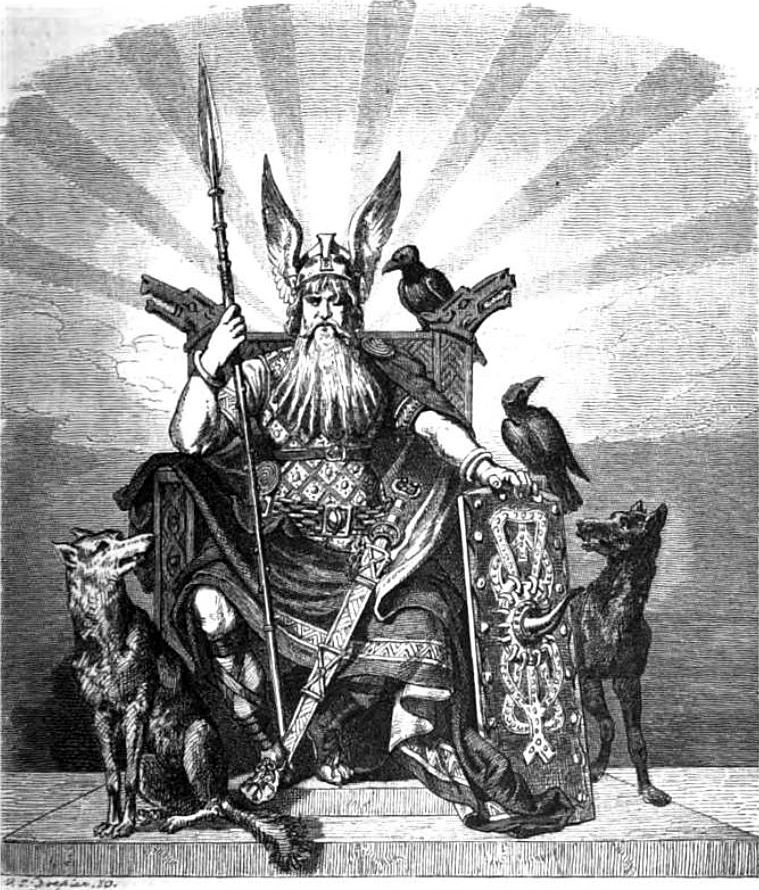

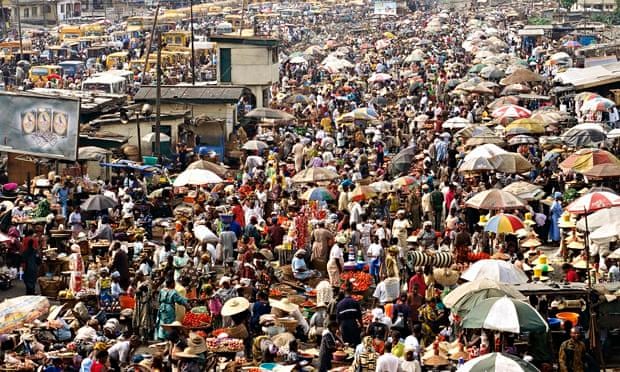

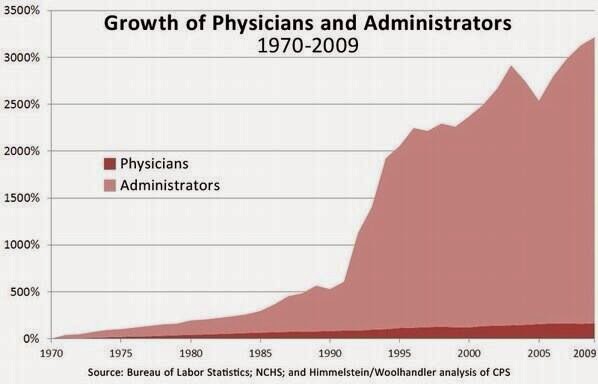



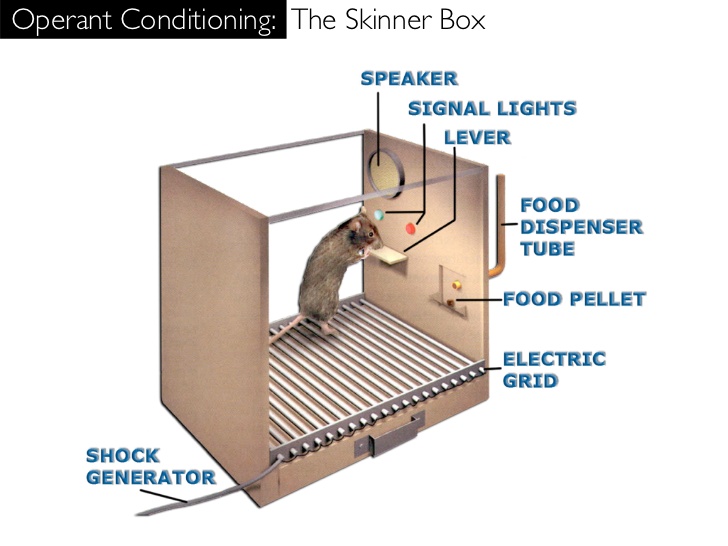
 The Writer in Black