Absinthe Myths

absinthe-4311636_1920
This page has been visited by the absinthe fairy.

While I enjoy a good Scotch, good Scotch is expensive Scotch.  Thus, I have spent some time experimenting with less expensive tipples.  One of my recent forays was into absinthe.  I found it okay but not great at first until I learned about the “proper” way to prepare it.  Since then, it’s become one of my favorites, on a par with a good Scotch in terms of personal enjoyment.

However, I run into three common myths about absinthe:  it’s illegal, it will get you high/cause hallucinations, and it’s toxic.

First, let me dispell that first one.  The ban on absinthe was resinded in 2007 making it legal to sell in the United States provided the thujone level (more on that in a moment) is less than 10 parts per million (10 mg per liter specifically).  Thujone is the active component in wormwood, the key, defining, ingredients in absinthe, and which is supposedly responsible for the “hallucinatory” and toxic effects.  Indeed the scientific name for wormwood, Artemisia absinthium, is where absinthe gets its name.

So, yes, you can buy “real” absinthe in the US.

At least some absinthes from before the ban was lifted have been tested and found to be well within the current US legal limit. The highest of 13 tested varieties was about 42 ppm. (And we’ll address that, too, here in a moment.)

The claims of hallucinatory effects of thujone are based on two things: very poor research done by a researcher who believed a-priori that alcohol in general and absinthe in particular was leading to the decline of the French and shape analyses of the molecules which led to guesses (which is all they were) that it would have effects similar to THC. However, that turned out to be false and it’s effect is to cause nerves to fire more easily which can leads to convulsions (i.e. that it’s a neurotoxin) but the dose required is much, much higher than one can practically get even by guzzling absinthe (once again, more on that in a moment). You might get enough to subtly alter the sensation of being “drunk”, but the claimed hallucinatory properties are pure myth.  There is simply no evidence of it being a hallucinogen. It is possible that the “easier firing neurons” caused by low levels of thujone can somewhat alter the experience of alcohol’s intoxicating effect, creating a different sensation but hallucinations are not going to be part of that experience, not unless you’re drunk enough to see pink elephants anyway or unless you talk yourself into it in a pure placebo effect.

Now, perhaps you’re worried about that “convulsant/neurotoxin” aspect.  That it can cause convulsions certainly sounds bad.  However, we can run the numbers.  At the legal limit in the US of 10 ppm, a 750 ml bottle of absinthe would have about .75 mg. In tests on mice α-thujone (the most bio-active version) is a convulsant with an LD50 (that is, half of all those receiving that dose die of it) of 45 mg/kg. At 30 mg/kg it had a 0% mortality. For a 90 kg man, that would be 2.7 grams, or about 3600 bottles of absinthe. At the highest tested level in pre-ban absinthes, you would need over 800 bottles of absinthe to hit life-threatening levels.  This would have to be done in a relatively short time because thujone is metabolized quickly by the liver.  And apparently ethanol inhibits the effect so the thujone would actually be less dangerous in absinthe as compared to the pure thujone used in the study.

The LD50 of ethanol is about 7 g/kg body weight.  For a 90 kg man, that’s just over a 630 grams of ethanol, or about one and a half liters of distilled spirits (depending on proof) hitting your bloodstream all at once.  It takes time for the alcohol to be absorbed so you would actually need to drink quite a bit more for your body levels to reach immediately lethal concentrations.  Even so, the ethanol in eight hundred 750 ml bottles (600 liters) of absinthe would kill you long before you ever reached toxic levels of thujone.  One bottle a day for over two years and two and a half months (800 bottles) and I think you’ll have much bigger problems than thujone.

The toxicity of absinthe has a grain of historical truth, however, not because of absinthe itself, but because of a confluence of historical factors. An aphid plague seriously depleted the wine grape crops in France in the mid to late 19th century, causing an extended wine shortage. A lot of people turned to absinthe as an alternate tipple. (Once diluted down in the traditional way for drinking absinthe it’s about the same alcoholic content as wine.) The sudden demand for absinthe drew in some unscrupulous (or perhaps just ignorant) producers. Bad alcohol sources were used but especially copper sulfate was used to produce the characteristic green color. Copper sulfate in the amounts used, is toxic, at least if one drinks substantial amounts (like, say, has a glass or two at every meal).  And since absinthe was competition to the wine industry, which, as you’ll recall, was already struggling due to the aphid infestations and subsequent destruction of the wine grape crops) it was in the interests of the wine industry to encourage the belief in the dangers of absinthe as much as possible.

And thus the reputation of absinthe for toxicity was born.  Absinthe properly manufactured and properly served is no more toxic than any other drink of similar alcohol content.

So if absinthe is something you’d like to try, feel free.  And if it’s something you enjoy, don’t let the myths stop you.  Just remember to drink responsibly and read labels carefully.  Absinthes do tend to be on the higher side in alcohol content with many varieties being over 140 proof (70% alcohol content), and some novelty varieties as high as 180.

Spoon theory and masks

spoon-5141358_1280

Short one today.

The “spoon theory” provides another way of looking at masks and why I am so adamantly opposed to mandatory mask rules.

The “spoon theory” came from someone trying to explain the problems people with chronic health issues face. He gathered up all the spoons on a table then going through various tasks for day took out spoons showing that the daily “budget” of physical and mental energy was being expended. Once the spoons were gone, the person was done for the day.

With my own issues, wearing a mask doesn’t completely stop me _but_, it does increase the “spoon cost” for anything I do while wearing a mask. That means I run out of spoons quicker and am less able to do things. And when I have expended all my spoons on “this absolutely has to be done” tasks, there are none left over for “this makes life a bit nicer to live” tasks. My quality of life goes down precipitously.  When you add in how little continuous mask wear does for the prevention of disease spread, to the extent that the UN’s World Health Organization (WHO) recommends against it unless you’re sick or careing for someone who is sick, then the cost/benefit falls heavily on the “against” side.

And I’m one of the lucky ones in that my issues are relatively minor. Other people have it much, much worse.

But politicians feel the need to be seen “doing something”, even when that “something” actually makes life worse for the majority of people.

What Libertarian Party?

So there was this:

107821022_3261398140577536_7076081953505767231_n

Anyone reading this blog much will know that I am strongly, strongly libertarian in my views.  Not full-blown anarchist (or “voluntaryist” as some like to style it), but very much minarchist.  However the “Libertarian” party has become anything but that.  It became blatantly obvious in 2016 when they nominated “Bake the cake” Johnson and “Ban the guns” Weld as their Presidential ticket.  And it continues with their current pick.  Take the above tweets as an example.

Her use of the term “actively anti racist” has three possible explanations:

  1. She doesn’t know what that term means as it is actually used currently in which case she is utterly oblivious to what’s going on in this country and, therefore, not to be voted for.
  2. She does know what it means, doesn’t actually agree with it, and is simply pandering to the Wokies, in which case we can expect her to continue to pander to them if by some cosmic joke she is elected and, thus, is not to be voted for.
  3. She does know what it means and agrees with it, in which case she is a Wokie and, thus, is not to be voted for.

It’s not a matter of disagreeing with her on one particular point (like, say, disagreeing about border enforcement) but rather what this says about her at a basic level.

If she had simply gone “We need to end qualified immunity, police brutality, sentencing disparities, and the war on drugs” I would have had no objection.  But, no, she had to appeal to the wokies with the “we need to be actively anti-racist.”

This is the same issue I had with Trump in ’16. He was all about making deals and while he talked a good game during the campaign he also was about “selling the fantasy” (his own expression from “The Art of the Deal”) and admitted they were “just flexible suggestions” (his words after he’d walked back one of his campaign talking points). Add in his history of supporting left-wing positions and candidates in the past and I expected him to “make deals” which would give the Left much of what they wanted because the squishes in the Republican party would go along with it. While he might not have tried to do as much bad as Hillary would have, given, the Republican opposition to Hillary that would not have been there for Trump (remember, this was my assessment before the election) I fully expected that he would manage to implement more of the Left Wing wish list than Hillary–who would at least have faced token Republican opposition–would have been able to implement.

I was wrong there, largely because the Left went completely insane with TDS, making deals essentially impossible and pushing Trump the other way. (Although he did manage to implement more Federal gun control than Obama did in eight years.) So a big “thank you” to the folk on the Left.

I cannot expect lightning to strike twice in that regard in the unlikely event of a Jorgenson win. I can expect them to continue to behave that way in the much more likely event of a Trump win.

So…Trump 2020.

“But the Police Need…”

armed-4674072_1920
This is a stock picture, probably from a training exercise since that looks like a quick attaching blank firing adapter on the end of that rifle.

One of the great ironies of modern US politics is, in great measure, the same people talking about “defunding” or outright disbanding the police are also the ones who just recently were saying that only the police should have certain weapons, whether certain types of guns or guns in general.

This is utterly ridiculous.

My position: Police officers should be forbidden from using any weapons or equipment prohibited to ordinary citizens in their jurisdiction.

Justification: With the sole exception of folk going out to deliberately target police officers, a very small fraction of all the violent crime out there, every threat the police face is faced first by ordinary citizens. Any arguments about the police “needing” certain weapons applies equally well to the ordinary folk who face the threat first. As for other equipment, perhaps the police have a greater need for things like fingerprint kits and the like since the police are specifically tasked with investigations of crimes, it also doesn’t hurt anything to allow private citizens to have them as well. Laws against unnecessarily disturbing a crime scene (Doctrine of emergency applies against that) and tampering with evidence are all the shield against misuse that is necessary.

Note: My personal preference is to resolve the difference by reducing restrictions on what the law abiding “ordinary” citizens can have rather than restricting what the police may have. I simply worded this one to come at the concept from the other side.

On This Day, Two Hundred Twenty-Two Years Ago. The Quasi-war with France: An Expanded Blast from the Past

ship-2275399_1280

On July 7, 1798, the United States Congress annulled the Treaty of Alliance we had signed with France during the American Revolution, leading to the undeclared “Quasi-War” with France.

This came as a result of the XYZ affair.  In July 1797, three Diplomats from the US:  Charles Cotesworth Pinckney, John Marshall (who would later become the fourth Chief Justice of the United States Supreme Court), and Elbridge Gerry traveled to France to negotiate problems that threatened to lead to war between the US and France.  Among these problems were the French seizure of neutral vessels that traded with Great Britain, with whom they were then at war.  Great Britain had likewise been seizing neutral ships trading with France but the US had worked out an accommodation with Great Britain via the Jay Treaty.

When they attempted to seek these negotiations the French Foreign Minister Talleyrand demanded bribes and a loan before formal negotiations could begin.  While this was common practice in Continental European diplomacy to the Americans it was highly offensive.  Despite nearly a year of attempts to meet for official negotiations Pinckney and Marshall left France in the Spring of 1798 without ever engaging in any formal negotiations.  Gerry, hoping to avoid all-out war as Talleyrand had threatened to declare war if he left, remained until someone with more authority could replace him.  It was not until later in 1798 that Talleyrand sent representatives to the Hague to open negotiations with Williams Van Murray, allowing Gerry to return home in October of 1798

Documents released by the Adams administration, in which the names of French Diplomats Hottinguer, Bellamy, and Hauteval were replaced by the letters “X”, “Y”, and “Z” respectively, leading to the name “The XYZ affair” being attached to the incident caused outrage in the US.  Federalists used the incident as an excuse to build up the US’s military. (Never let a good crisis go to waste.) Considerable anger was directed at Jeffersonian Democratic Republicans for their pro-French stance and Gerry (still at that time in France) although himself non-partisan, was attacked as having significant responsibility for the commission’s failure.

The upshot of this outrage was that Congress annulled our Treaty of Alliance with France on June 7, 1798.  This began the “Quasi-war”.  Neither the United States nor France declared war on each other but for a period of two years they fought naval engagements attacking each others shipping  in the West Indies.  The nascent US Navy along with 365 privateers (privately owned vessels armed and authorized via “Letters of Marque and Reprisal” to fight our nation’s enemies) fared surprisingly well against the French.

John Adams, President at the time, steered a “middle path”, avoiding the outright war that some among his own Federalist party and those of the Democratic-Republicans who tended to favor France which did, after all, style itself as a republic (despite being radically different from the US Republic of the day).  On the Federalist side, most notably, Alexander Hamilton favored war and expected in such a war to be the field commander of US Army forces that would be used to attack holdings of the French and their Spanish allies in the Americas.  In this he had the backing of George Washinton, who would have been the titular head of the army but, being at this time too old for field command, his chosen Lieutenant–Hamilton–would have actually commanded in the field.  This would have dramatically furthered Hamilton’s own political ambitions.

On the Democratic-Republican side, Jefferson strongly favored making peace with France and even alliance.  Strongly pro-Republican and anti-Monarchist, he saw in France an extension of the same revolutionary impulse that had created the United States.  Even the Reign of Terror, over by the time of the quasi-war, did not sway him from this view. (Both of Jefferson’s and Hamilton’s role in the Quasi-war is covered in David McCullough’s biography of John Adams.)

In the end, Adams’ middle course succeeded.  The success of the US and Royal Navies (the Royal Navy was also operating against the French in that area although not in any joint capacity with the United States), along with the more conciliatory position of First Consul Napoleon Bonaparte, severely reduced the activity of the French forces in the West Indies.  The Convention of 1800, on September 30 of that year, ended the Quasi-war.

Let Freedom Ring

fireworks-945386_1280

Yesterday was the Fourth of July, Independence Day.  And a lot of people are saying that it’s a horrible holiday, we’re a horrible nation (and were worse then), and it’s horrible to celebrate it.  Celebrating the Fourth of July is, they say, celebrating White Supremacy.  It’s celebrating slavery.  It’s celebrating the horrible, dishonest, violent way white Europeans treated the American natives.

I say that’s utter cark.

Yes, the nascent United States was not without big, glaring flaws. Yes, we had slaves.  Yes, the white European settlers often thought of themselves as superior to every other people’s on the planet.  Yes, the way the natives were treated was terrible.  So stipulated. But the chain of events set in motion by our declaring Independence from Great Britain has led to the greatest birth of Freedom and prosperity this world has ever known.

In a nice, neat, ideal world we could have gotten it perfect from the start. There would have been no chattel slavery. Men and women would have had equal rights, including suffrage, from the start. We would have negotiated peacefully with the indigenes and come to equitable arrangements for land and resources. (Some of the founders of the original colonies made a point to buy the land they used from natives and generally lived in peace with their indigenous neighbors–until somebody from a neighboring colony started behaving differently.  See the founding of Rhode Island as just one example.)

But the real world is messy. It’s always been messy. There’s no reason to believe it will ever be anything but messy. So, yeah, there was a lot wrong with the colonies that declared their Independence from Britain in July of 1776, but there was a lot right too. And a smaller step than we would, in hindsight perhaps prefer, it was a move in the right direction.

So give thanks and praise to whatever gods their might be that those learned men in Philadelphia in July of 1776 took the steps they did and brought forth on this continent a new nation, conceived in liberty and dedicated the the proposition that all men (in the old sense of “humankind”) are created equal.

Black NY Times Writer Says He Needs a Gun to Feel Safe

The New York Times had an op-ed where a man said that as a black man he needed a gun to feel safe in this country.

Contrary to what he might think, I cheered the sentiment (oh, not the stuff he went on to say, but his desire to own a gun).

gun-1678989_1280
Stock photo.  Not represenative of the article.

Are you a law abiding citizen? If so, then I _want_ you to have a gun. I don’t care if you’re black, white, or purple with green polka dots. If you are a law abiding American I want you to be able to have a gun if you choose.

I don’t care if you have an innie or an outie, whether you have an innie and think you would be better with an outie (or vice versa or anything in between).  I don’t care how you like to connect your particular arrangement of Tab A with Slot B, or whatever arrangement of tabs and slots you prefer (so long as it’s consensual).  If you are a law abiding American I want you to be able to have a gun if you choose.

To paraphrase an old TV character, I don’t care if you eat bagels, burritos or French toast.  I don’t care if you’re ancestors came across the land bridge from Siberia or got off the boat five years ago (minimum time living in the US to apply for citizenship).  If you are a law abiding American, I want you to be able to have a gun.

I don’t care if you vote D, R, L, S, I, X, Y, Z, W, T, or F.  I don’t care if you are rich, poor, or middle class.  I don’t care if you own, rent, or shelter under an overpass.  If you are a law abiding American, I want you to be able to have a gun if you choose.

Am I getting through to you here?  I have only one requirement on my desire that you be able to have a gun if you choose, that’s “are you a law abiding American.”

And that’s not even as restrictive as it might seem.  After all, those who are not law abiding can always get guns if they want them.  No laws we pass can change that.  Gun control in the US has been an abject failure every single time it has been tried.  Every.  Single.  Time.  Other countries?  Well, ask for a documentable example of a country that had high violent crime, passed gun control, and ended up with low violent crime.  It just doesn’t happen.  And, no, Australia isn’t an example.  Their violent crime rates were trending down before they passed their gun ban.  They continued trending down at about the same average rate afterward.  Some anti-gun folk pick a high point in the year to year random variation around the general trend before the ban to compare with a low point afterward to “prove” the gun ban reduced crime.  But that’s okay.  Some pro-gun people pick a low point before the ban and a high point afterward to “prove” that crime actually went up.  The truth is that the ban had no discernible effect (except the rise in the use of homemade guns by criminals.)

If you are a law abiding American, I want you to be able to have a gun if you choose.  I want to remove every possible restriction away from your ability to have a gun.  I want the regulations and taxes that drive up the cost making guns harder to afford gone.  I want the licensing and other restrictions that make it more difficult and troublesome to own a gun removed.

If you are a law abiding American, I want you to be able to have a gun if you choose.

And when you meet a real racist, sexist, transphobe, fascist, white supremacist, bigot of any stripe, or just plain ordinary garden-variety criminal, who puts you in reasonable fear of death or serious bodily injury, I want you to put several large holes in him both to stop his threat to you and “pour ecourager les autres.”

And if you expected anything different from me or my gun-owning friends then you are the one who needs to examine your assumptions.

Asimov’s Three Laws and Paternalism: A Blast from the Past

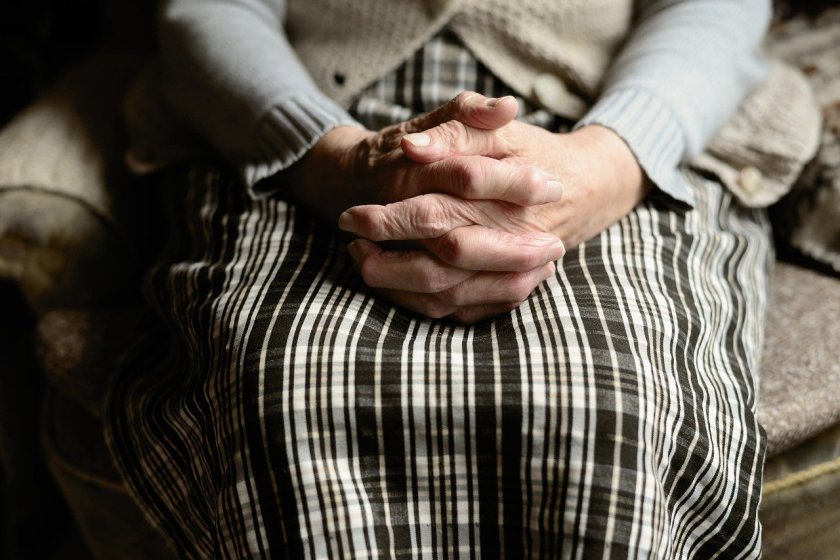
hands-4051469_1280

All of the hand-wringing (and hand folding–see below) about the government telling us what we should do, what we must do (with Men with Gunstm ready to enforce that) over Winnie the Flu brought this post from a couple of years ago to mind.


The late Science Fiction writer Isaac Asimov had a great many short stories and a number of novels that involved humanoid robots.  A common feature of most of these (there were a few exceptions) involved his “Three Laws of Robotics.”

  1. A robot may not harm, nor through inaction allow to come to harm, a human.
  2. A robot must obey the orders of a human so long as those orders do not violate the first law.
  3. A robot must act to preserve its own existence provided that action does not violate either of the first two laws.

Most of the stories involved unexpected consequences of those laws or, in some cases, what happens if the laws are modified a bit.  One story involved strengthening the third law a bit and weakening the second causing the robot to get caught in a loop requiring setting up a situation invoking the first to break it free.

The stories were basically upbeat.  The robots, limited by their laws, a net positive to humanity.

And most of this relies on the robots being, on the whole, rather dim and not carrying those three laws to their ultimate nature.  Yes, some robots were presented as quite intelligent–R. Daneel Olivaw of the original “Robot Novels” was a police detective fully equal to his human compatriots–they still were “dim” when it came to carrying out the laws to their fullest.

To show where those laws could lead consider Jack Williamson’s Humanoids as presented in the story “With Folded Hands.” The Humanoids’ Prime Directive was simple: “To serve and obey and guard men from harm.” Parse that and it’s basically the first two of Asimov’s laws of robotics.  And while “To serve and obey” is placed before “guard men from harm” it becomes rapidly clear that the latter takes priority over the former.

The Humanoids offer their services for free.  And they soon become very popular.  And because they are interested in guarding men from harm they get jobs directing traffic and many other ways.  But soon a darker side becomes apparent.  Oh, they’re not trying to take over humanity to enslave or exterminate us or anything like that.  No.  They want to “protect” us.

Drive?  Oh, no, it’s much too dangerous for a human to drive.  Let me do it for you.  No.  I insist.  I really insist.

The tools in your workshop?  Too dangerous.  You could lose a finger or put out an eye.  No, these are much safer.  You can play with this foam board.  If you need any real furniture or anything like that, we’ll make it for you.  That’s much safer.

Exploring?  Oh, good heavens no.  People get hurt, even killed exploring the unknown.  Just stay here where it’s safe.  I insist.

And so on, anything with the least component of risk, they are oh so sorry but you simply cannot be allowed to do that.  They need to protect you don’t you know.  The Humanoids didn’t want to enslave or exterminate humanity.  They wanted to turn us into pampered pets, not allowed the least little bit of challenge or risk.  And so the protagonist accepts his ride home “with folded hands” for there is nothing left to do.

Jack Williamson wrote this story in the aftermath of World War II.  In interviews he said that it was with atomic weapons in mind, showing how some inventions turn out to be far more dangerous than ever imagined.

Personally, I think it speaks poignantly to the danger of government paternalism.   Rules and restrictions designed to keep people “safe” not just advice where reasoning adults can make an informed decision for themselves but a governmental pat on the head saying “now, now.  Daddy knows best.”  Daddy knows best what you should drive.  Daddy knows best what you should eat.  Daddy knows best what you should drink.  Daddy knows best what activities you can engage in.  Oh, it starts “reasonably” enough.  There are some things that are recklessly dangerous not just to the person doing them but to everyone around them.  But it never stops there.  There’s always some new “too dangerous to allow” activity.  And one after that and another after that.  And there’s no definitive stopping point, particularly once you go past “people will have to use resources to care for you” to “people will be sad” (had that one used against me about why drugs should remain illegal–people will be unhappy if you get harmed by drugs) as an excuse for further restrictions.

Jack Williamson gave us the Humanoids, insinuating themselves into society taking away all choice in the name of “safety.”

I give you the governments of the world.