This blog

I suppose this belongs in the “about” page, but today I’m just going to talk about what this blog is and isn’t.

This is not a political blog, not entirely, although I will frequently discuss politics and particularly my own views on political subjects.  My views can be summed up in the statement by the late Barry Goldwater: “I would remind you that extremism in defense of liberty is no vice!  And let me remind you also that moderation in pursuit of justice is no virtue!” This mostly makes me a “small-l” libertarian minarchist

This is not a writing blog, not entirely, although I will talk about writing and related subjects from time to time.  What restrains me here is that I recognize that I am a very small fish in a very large pond and, frankly, most of what I’d have to say others with more cred than I’ll ever have have said before.

This is not a Goth blog, although I do appear to fall within the range of the “Goth” subculture.  On the outskirts maybe, but within the range.  And as such, I will occasionally write on topics related to Goth Music, Goth/Symphonic Metal (Hmm, ought to do a music post sometime where I collect some YouTube videos of some of my favorite songs), and Goth Fashion.  And also my own perspective as a libertarian Goth.

This is not an Asatru blog, although from time to time I will talk about Asatru and my own practice as an “Asatru leaning agnostic” or perhaps a “Practitioner of, if not a believer in, Asatru.”

This is not a “promo” blog, not entirely.  Sure, I’m hoping will come here, read what I have to say, and be moved to buy some of my work, but I’m not spending all my time trying explicitly to “sell” my stuff.  You’ll get occasional snippets and news items about releases and the like but mostly I’ll just rely on the “My Titles for Sale” page and the list of clickable covers on the blog to do the selling work. (So, please, check them out.)

All these elements, and more, are part of me.  And that’s what this blog is about.  Me.  So come in, kick your shoes off, and let’s get to know one another.


Congratulations to the Dragon Award Winners

  • Best Science Fiction Novel
    Babylon’s Ashes, by James S. A. Corey
  • Best Fantasy Novel
    Monster Hunter Memoirs:  Grunge, by Larry Correia and John Ringo
  • Best Young Adult Novel
    The Hammer of Thor, by Rick Riordan
  • Best Military Science Fiction of Fantasy Novel
    Iron Dragoons, by Richard Fox
  • Best Alternate History Novel
    Fallout, the Hot War, by Harry Turtledove
  • Best Apocalyptic Novel
    Walkaway, by Corey Doctorow.
  • Best Horror Novel
    The Changeling, by Victor Lavalle
  • Best Comic Book
    The Dresden Files:  Dog Men, by Jim Butcher, Mark Powers, and Diego Galindo
  • Best Graphic Novel
    Jim Butchers The Dresden Files:  Wild Card, by Jim Butcher and Carlos Gomez
  • Best Science Fiction of Fantasy TV series
    Stranger Things, Netflix
  • Best Science Fiction or Fantasy Movie
    Wonder Woman, directed by Patty Jenkins
  • Best Science Fiction or Fantasy PC or Console Game
    The Legend of Zelda:  Breath of the Wild, by Nintendo
  • Best Science Fiction of Fantasy Mobile Game
    Pokemon Go, by Niantic
  • Best Science Fiction or Fantasy Board Game
    Betrayal at House on the Hill:  Widow’s Walk, by Avalon Hill
  • Best Science Fiction or Fantasy Miniatures/Collectible Card/Role-Playing Game
    Magic the Gathering:  Eldritch Moon, by Wizards of the Coast

Congratulations to all the winners.

Asatru and Racism. (It isn’t.)

So there was this: Mark Potok of the “Southern Poverty Law Center” made the following statement about Asatru: “To followers, [the Norse Gods] are big, tough white guys who, when they see a woman they want, grab her by the hair and pull her in the cave.  It’s seen as this ultra-male, super muscular religion, which is antithetical to Christianity and Judaism…it’s a comic book religion in a lot of ways.”

We’ve also got Jack Jenkins of ThinkProgress saying, “Today, followers of the tradition are few in number, but represent a notable percentage of violent white supremacists.” Mind you, he doesn’t back that up with any statistics.  He just makes the assertion.

Are there racists that profess to follow the Norse Gods?  Of course.  Just as their are racists who claim to follow Christianity, who claim to follow Judaism, who claim to be Atheists, who claim to follow various tribal religions, or who claim to follow pretty much any religious belief, or lack thereof, you care to name.

In the case of Asatru, claiming that the religion is in some way racist is ridiculous.

Let’s look at one of the biggest organizations, The Troth:

The Troth is open to all who seek to know and to honor the Gods, ancestors, and values of the Germanic Heathen traditions, regardless of gender, race, nationality, or sexual orientation. The Troth stands against any use of Germanic religion and culture to advance causes of racism, sexism, homophobia, white supremacy, or any other form of prejudice.

But there’s also the content of the religion itself.

First let’s look at Potok’s silly idea of “when they see a woman they want, grab her by the hair and pull her in a cave.  What do the stories of the Norse Gods tell us about that?

First, there’s the story of Freyr’s courtship of the giantess Gerd.  This is where Freyr sees the giantess he desires and grabs… Oh, wait, no he didn’t.  Instead he asks his page Skirnir to act as a go between and convince Gerd to accept his suit.  The page asks for Freyr’s magic sword as payment.  Freyr agrees (thus, being deprived of the sword, ensuring his own death at Surtr’s hands at Ragnarok).  Skirnir goes and wins the lady’s affections on Freyr’s behalf and the two are wed.  And, in due time, because of this sequence of events Freyr is doomed to die at Ragnarok.

Then there’s Freyr’s sister, Freyja.  Once, when the frost giants through one means or another had managed to obtain Thor’s hammer–which was a pretty serious problem as you might imagine–the lead giant Thrymr demands Freyja for his bride as the price for the hammer’s return.  When Thor and Loki go to ask her to acquiesce (note:  they ask.  No dragging by the hair involved) she basically tells them “Nothing doing.  If you want the hammer back so bad you marry him.” (I’m translating for you.) And that’s what they do.  We get Thor in drag, pretending to be Freyja, selling Thrymr on the idea (Thrymr was not the sharpest ax in the shed) and Thor convinces Thrymr to let him (who Thrymr still thinks is Freyja–really, really stupid giant there) touch the hammer.  And, well, once Thor gets his hand on the hammer it’s all over but the dying.

Oh, by the way, not all the valorous dead (usually described as those who die in battle but evidence suggests that it was more complicated than that) went to Valhalla.  Half of them went to Freyja’s hall of Folkvangr, where she ruled.  Yep, Norse belief was that half of the valiant dead, a big part of Viking “heaven” was ruled by a woman.

Then there’s the sea god Njordr and how he married the giantess Skadi.  Did he grab her by the hair and carry her off?  Nope.  Pretty close to the opposite.  Skadi’s father Thjazi had been killed in an altercation with the gods and she came to demand blood price.  The price she demanded was one of the gods to marry her.  They agreed with the caveat that she had to make her choice of which god by selecting when the gods were standing behind a partition with only their feet visible.  She picked the prettiest pair of feet, hoping to get Baldr, the most beautiful of the gods.  But while Baldr was the most beautiful overall it was Njord who had the prettiest feet.

So we hardly have this grab women by the hair and drag them back to the cave.  Once again, this man isn’t straw, but as ephemeral as smoke.

With these myths as part of their belief structure it is no great surprise that Norse women, able to own property, to divorce bad husbands, to inherit, to keep their children and have their children inherit even after divorcing those children’s father, had far greater freedom and power than other women in Europe and, indeed, most of the world.  This was a tradition that remained strong even with the rise of Christianity in Norse lands.

Then there’s this “racist” bit.  Again, one looks in vain for support for racism within the Lore itself.  Consider, the first God was Buri, unearthed from the ice in Ginungagap by the licking of the cow Audumbla.  When Buri wanted a wife, there were no other As to marry so he took a frost giant to wife.  The begat a son, Bor.

Bor, half giant, married the frost giant Besla, and the begat Odin and others.

Odin, 3/4 frost giant, got around a bit.  But the one that concerns us here is that he got together with the frost giant Jord, who represented the Earth, and begat Thor.

Thor, probably the most beloved of the Norse Gods in antiquity and today, 7/8 Frost Giant.

Ah, but that’s patrilineal descent you might say (Misogyny!  The mothers don’t count!).  But then you have Loki.  Loki has been called “The Son of Laufey” as one of the many ways he was known (“kennings”).  But Laufey was his mother’s name.  His father, according to Snorri, was the frost giant Farbauti.  Yet Loki was fully accepted among the Aesir, well, at least until the Baldr incident but the troubles that followed that were not because of his “race” but because of his actions.

And Njord, Freyr, and Freyja mentioned above?  Njord and his sister (unnamed in surviving sources) were part of a hostage exchange that ended the Aesir/Vanir war (the Vanir being a rival race of gods).  Njord’s children, Freyr and Freyja came with him.  All of them were accepted as equals among the Aesir.

Now, some might make a big deal of “Svartalf” versus just “Alf”. But those were just descriptions.  The inhabitants of Svartalfheim were black.  Those of Alfheim were not.  And, no, it wasn’t a case of “Svartalfs” being bad and “Alfs” being good.  Examples of both could be allied with the gods, or opposed to them.  It depended on the individual and the situation.

But then, there are mortals.  The concept most people have of Valhalla (most people don’t remain ignorant of Folkvangr) and Hel is that those who die in combat go to Valhalla and those who do not go to Hel.  Well, it’s more complicated than that (Consider Brynhild’s Hel Ride–where it is stated she, who did not die in combat, and Sigurd, how had, will be together in the afterlife).  But you now what’s not a differentiating characteristic of who goes one place or the other?  Skin color.  Race.

It is our deeds, our courage, our honor that earns us a place before the gods, not the color of our skin, the texture of our hair, or the shape of our features.

What we do defines who we are to the Gods, not our inconsequential physical features.


Fisking “A Manifesto for Artistic Pessimism”.

An article over on “Radical Art Review” extoling the virtue of being bleak and depressing in the arts.  Folk who have followed my work should understand that I take a different approach.  I can be dark sometimes, but I simply loathe the “gray goo” that is so much modern “art” and “literature”.

The article text is in Italics.  My responses are in Bold

Romanian nihilist and pessimist philosopher Emil Cioran once wrote “only optimists commit suicide, optimists who no longer succeed at being optimists” and that “it is not worth the bother of killing yourself, since you always kill yourself too late”.

So they no longer succeed at being optimists?  That means they are not optimists any more.  That would make them pessimists?  Optimists commit suicide when they aren’t optimists any more?  That means optimists don’t commit suicide.

This kind of doublethink masquerading as profound just sets me all aquiver with anticipation for the rest.

In these short collection of words, this tragic thinker – who wrote books such as On The Heights of Despair and A Short History of Decay – speaks to something at the very core of life, especially within this culture – the need for sincere, honest and authentic pessimism. He wrote that “Chaos is rejecting all you have learned, chaos is being yourself” and, following from this, it is your-self I wish to appeal to in the words I present here.

So he’s a “tragic” thinker huh?  A little bit of self-important tripe and you’re just fawning all over him?  That bit of doublethink doesn’t speak to the need for anything except the “need” for attention by the self-important little whiner.

“One must have chaos within to give birth to a dancing star” Nietzsche

Well now, chaos, change, disorder, that’s another ballgame.  It has nothing to do with pessimism, mind you.  Hope is found in change.  Success is found in change.  Growth and progress and, indeed, all good things, come from change, from chaos.

Indeed, I’ve had opportunity to speak to a number of people who have been suicidal, who even made very sincere attempts to end their own lives.  And the one thing they all had in common was the belief that they were locked into their situation, where nothing would ever get better.  In other words, it was the very opposite of change.  Their miserable (as they saw it) situation was the order of things for them.

But, hey, you got to quote a philosopher in order to sound profound, even though the quote really doesn’t speak to the thesis you’re trying to sell, so there is that.

The fact that the vast majority of films present a near totalising fatalistic optimism is abundantly obvious. Most films end with the desired conclusion to the narrative: with the hero surviving by the skin of their teeth; or the two beautiful people find love in a beautifully romantic setting; or the rebels narrowly avoiding Darth Vader’s clutches and obtaining the Death Star plans, whatever other example you care for.

Totalising?  Is that a word?

And of course they do! Happy endings sell. When it is all said and done, people want things to “go right” and for things to fit within the desires of this cultures ideological narratives.

And there you go.  People prefer those kinds of stories.  What you’re missing is that people like those stories for one very primal reason:  The story where one decides ones own fate through ones actions, where people receive the just deserts of their efforts, where they rise to and above their challenges, speaks to how people desire to believe in those things.  They may not see them in the world around them but they want to.

But like with other non-existent things you have to believe in them, you have to want them, before you can make them happen.  People want hope.  They want an ideal to strive for.  They want to believe.

But whatever the reason, that is what they want.  If you know that this is what people want and decide to do something else, why then you have no one but yourself to blame if people stay away from your art in droves.  Oh, you might convince a handful of politicians to provide you a grant to pay for it, often using money extorted from others by threat of force (we call that “taxes”) but your art still won’t appeal no matter how big the circle-jerk of “sit around telling each other how great they are” folk you have.

And any message you have in it?  That will be lost too.  Perhaps you’ll get some press via outrage, but in the end that will fade and you’ll be forgotten and nobody outside your inbred circle of naval gazers will care except to laugh at the ridiculous stuff people call “art”.

Situationist philosopher Guy Debord asked about film:
“Do we simply watch the images rolling past, become happy or sad at the whim of the filmmakers, only to return to our regular lives without any effect on how we view the world and how we could possibly change it?”

In this question Debord raises the issue of the film watcher being a passive observer, absorbing the narratives of filmmakers, in such a way that it maintains everyday normality.

Oh, another self-important philosopher.  Excuse me while I roll my eyes.  The answer, of course, is “no”.  Films and other art affect life.  But to do so it first has to be experienced and absorbed.  The painting that nobody looks at.  The film that has only a half dozen viewers.  The book that goes to the remainder table as a last ditch effort to sell it before the cover is stripped and sent back to the publisher and the interior pulped, none of them will effect change because they don’t reach people to affect them.

If you want your art to inspire change you have to reach people.  You’ve got to find the way to make it popular and then slipping your message in painlessly so that people absorb it along with their entertainment.  Unrelieved gloom and doom doesn’t generally do that.

Through the medium of film, in most cases, the viewer passively consumes the notion that things do not need to change, because things will work out happily in the end. Batman, Frodo Baggins or Neo will come and defeat the Big-Bad, or the T-Rex and Raptors will kill the Indominus Rex.

What planet did you see those movies on?  In each of those movies, not only did things need to change but the characters had to work their asses off to make them change.

Frankly, you’re coming off as more than a little deluded here.

Two questions come to mind though.

First, are things inevitably going to turn out for the best, or is that just an idea that enables individuals to participate in this culture without any thoughts regarding consequences?

That “idea” is a pure fantasy that has no connection to any of the “art” you’re criticizing.  From the perspective of the characters there was nothing “inevitable” about the success for the quest for Lonely Mountain.  There was nothing “inevitable” about Sauron’s defeat.  There was nothing “inevitable” about Neo defeating Agent Smith.  There was nothing “inevitable” about Batman coming through and saving the day.  In all cases, they had to overcome great challenges and make great effort to make those results happen.

Your man isn’t just straw, it’s as ephemeral as smoke.

Second, what is the purpose of art/film and are they supposed to affect the viewer in any particular way?

Before it can do that, it must first have viewers.  See above.

Starting with the second question, Oscar Wilde, in response to moral critics of his age, promoted “art for arts sake” and criticised the “monstrous worship of facts” within art movements. Perhaps Wilde is right and that art need not serve any moral purpose and should be done for its own sake.

And I’ll respond with a quote by Samuel Johnson: “Nobody but a blockhead wrote except for money.”

Perhaps you might consider that there can be more than one answer to the question.  In fact, I’ll add another quote, this one by Kipling from his poem “In the Neolithic Age”:

There are nine and sixty ways
Of constructing tribal lays
And every single one of them is right.

This doesn’t mean art cannot hold egoistic instrumental value. In the philosophy of art, aesthetic cognitivists argue that art, particularly painful art, is valuable as a means of empowering individuals.

You have a strange definition of “empowering”.

Perhaps, amorally, mediums such as film can serve as an instrumental means of empowering individuals around painful matters, like the idea that things will not turn out for the best: pessimism.

Selling people on the idea that no matter what they do, things will go to hell (pessimism) is the exact opposite of “empowering”.  Accept your miserable lot.  Don’t expect better.  Don’t strive for better because you’re not going to get it and you’d just be wasting your effort. Yeah, that’s “empowering.”

If you’re on some pretty serious drugs.

For the rest of us that’s almost the exact opposite of empowering.

Antonin Artaud developed an approach to theatre called theatre of cruelty, through which theatre “wakes us up. Nerves and heart,” and through which we experience, “immediate violent action,” that “inspires us with the fiery magnetism of its images and acts upon us like a spiritual therapeutics whose touch can never be forgotten”. Perhaps film can serve as an immediate violent action which inspires a fiery magnetism, effecting the viewer spiritually and therapeutically.

And Die Hard does all that plus blows the shit out of the bad guys too.  As C. S. Lewis said, “Since it is so likely that (children) will meet cruel enemies, let them at least have heard of brave knights and heroic courage. Otherwise you are making their destiny not brighter but darker.”

Regarding the question of whether or not things are inevitably going to turn out for the best – whether optimism holds true – we should consider this in multiple senses. Existentialist, nihilist and absurdist philosophers, like Nietzsche or Camus, argue that ultimately everything ends in death and that all action is ultimately futile: a pessimist’s conclusion, though they all generally argue that there is personal/subjective/egoistic value in actions and the pursuit of meaning.

There you are with that word “inevitably”.  And those philosophers who argued that?  How did they respond?  If they truly believed that codswallop, then they would have sat on their asses doing nothing (because doing anything would be futile) until they starved to death.  Personally, I like the one that is generally (falsely) attributed to Marcus Aurelius:

“Live a good life. If there are gods and they are just, then they will not care how devout you have been, but will welcome you based on the virtues you have lived by. If there are gods, but unjust, then you should not want to worship them. If there are no gods, then you will be gone, but will have lived a noble life that will live on in the memories of your loved ones.”

If you can’t find meaning in that, well, that says a lot more about you than about any philosophy.

We could also look at the question from a non-philosophical gaze, looking at the environmental and socio-political situation where all paths seemingly lead to ruin: when the sixth mass extinction event and climate chaos pose significant existential threats to humanity and this culture, as well as the biosphere; where nuclear war and World War 3 become ever more possible situations. All of which paints a particularly bleak future, whether you value this culture or the biosphere.

This is what happens when you drink your own ink.  Even if any of these truly apocalyptic scenarios were to come to pass there would still be room for survival, hope, and rebuilding.  Do you want a list of post-apocalyptic books that illustrate that?  I can get one for you.

People have been predicting imminent doom for centuries.  Again and again they’ve been wrong.  Not just a little bit wrong but wildly insanely wrong.  Yet every time their dire predictions fail they come back around with the revised version. “This Time For Sure.”

“I don’t know about you reading this, but pessimism feels like the more honest, sincere and authentic outlook.”

That’s because you look at the world through your own dark glasses.  I’m tempted to turn Plato’s allegory of the cave around on you but you know what, people who have ears to hear will grok it without my having to spell that out.

Perhaps, in an egoistic aesthetic cognitivist sense, a pessimist cinema of cruelty would be valuable, as a means of empowering individuals to respond to, what postmodernist philosopher Baudrillard called the desert of the real – a real that is becoming increasingly bleak with every passing day.

Your dark version of reality notwithstanding, as Ouida, pseudonym of Maria Loise Rame. From “Romance and Realism” in “Frescoes and other stories” (1883 so you’re not saying anything new) wrote: “But the Vatican Hermes is as ‘real’ as the Japanese netzke, and the dome of St. Peter’s is as real as the gasometer of East London; and I presume the fact can hardly be disputed if I even assert that the passion flower is as real as the potato!”

Disaster and apocalyptic/post-apocalyptic films (such as The Matrix, Book of Eli, Elysium, 2012, Day After Tomorrow, Children of Men, War of the Worlds, I Am Legend, Armageddon, the Terminator series and other similar popular titles) all end on a hopeful optimistic note, where ruin is averted.

And they work their assess off to make that happen*.  Seems like a pretty good lesson to teach. (*Okay, “War of the Worlds” was a gimme, but that was more a religious allegory.)

Films like V for Vendetta and the Hunger Games series, which take a generally leftist-revolutionary narrative, generally conclude with mass people’s movements being able to overpower the Big-Bad and winning out – perpetuating the idea that hopeful optimistic endings are really viable at this point in time.

And again they work their assess off to make that happen.

Even films like Avatar and Ferngully: The Last Rainforest, which take somewhat of an anti-humanist, anti-civ, radical-environmentalist narrative, end with things “working out”.

Well, sort of.  Most folk I know laugh at Avatar because of how ridiculous both the setup and the denoument was–but not for purposes of “pessimism”.  But even there, the film “good guys” had to work their asses off to bring about the ending they wanted–however ridiculous that ending might be.  Are you seeing a theme here?

Perhaps radical film projects should draw from films like Apocalypto, The Road, Escape From L.A., 12 Monkeys, Knowing, The Time Machine, Survivalist, Into The Forest and TV series like Black Mirror, and adopt a pessimist cinema of cruelty approach. Maybe this can serve as a means of empowerment through discomfort, as the desert of the real becomes bleaker and bleaker.

Because teaching people that there is nothing they can do, that things will only get worse, that there is no hope, that there are no passionflowers but only potatoes (and early 19th century Irish potatoes at that), is so very empowering.  I suppose if you convince yourself that the future is unalterably dark then you don’t have to make excuses for not trying.  That’s a kind of “empowerment” I suppose–for weak, pathetic losers.

I missed the opportunity to see the latest edition to the new Planet of the Apes saga, but look forward to being able to watch it on DVD or stream it online, as it is an interesting series. I am also personally looking forward to seeing the new Bladerunner film (and hoping it isn’t going to be another nostalgia porn let down). Both of these films hold the potential to be honest reflections of this culture and our current situation.

We’ll wait and see.

There’s a reason that Planet of the Apes saga was a flop at the box office.  It will only “influence” people like you, people who are already choking on their own nihilism.  So you go right ahead and wallow in your pessimism.  The rest of us will continue to find inspiration in success to actually strive to make the world a better place.

My Daughter the Model, Part Two

My daughter had her first ever professional modeling gig, a cover for an independently published Science Fiction novel.  The book has just been released:

$2.99 on Kindle, $8.99 in paperback.

Jan Childers grew up orphaned in the slums of decaying post-diaspora Earth. She was raped, beaten, and starved. Yet she survived.

She escaped to become a citizen of the Commonwealth of Free Planets, and joined the Commonwealth Space Force.

Over the next twenty years, she turned the CSF into the most powerful and dangerous space fleet that history had ever known.

Jan Childers rose to lead that fleet in the Commonwealth’s darkest hour, against freedom’s most deadly enemy — Earth itself.

If this looks interesting, give it a try.

License Guns Like Cars: A Blast from the Past

Gun control is a perennial topic on my social media accounts.  And soon, sure as anything, someone will bring up “we license cars” and “we should license guns like we do cars.” Well, leaving aside the idea that arms, including firearms, are a fundamental right, expressly guaranteed in the Constitution and cars are not, people don’t realize just what “license guns like cars” would mean.

Simply put, if you really mean it, if you mean “like cars” then I’ll take that “compromise” right now.  Right. this. instant.

If we license guns like cars, then, first, licenses are only required for cars and the operators thereof, that will be operated on the public streets.  No license required for use on private property. (Note:  Don’t bother challenging me on this; I used to drive autocross and have not only seen, but driven, more than a few cars that are not licensed, titled, or otherwise registered because they were never intended for use on public streets.  In fact, most of them weren’t legal for public streets.)

Licenses will be available to individuals as young as 16, learners permits (for operating with supervision on the public streets) as young as 15 (depending on the State).

Licenses valid in all 50 States and every municipality within those States.

Licenses valid, by treaty, in most foreign nations (An “international drivers’ license” is simply a translation of your State drivers’ license into various foreign languages so the local law enforcement can know what your State licensed you to drive–has no legal weight in and of itself).

No federal license required for running a business buying and selling.

No background checks for purchase.  Indeed, if you don’t intend to operate it on public streets no paperwork at all beyond a bill of sale (and that’s just to protect you in case the previous owner wants to claim you stole it).

No license required to transport on public streets, concealed or not, (Those cars at the autocross?  They didn’t get there by apportation–they were all transported on public streets, many in ways that would count as “concealed” for firearms in at least some States).  Oh, and at least one state considered (transported in a vehicle) exactly the same, legally, as carried on ones person for firearms so it’s entirely valid to consider a trailered vehicle comparable to a firearm on ones person for purposes of comparison.  After all, if the State considers the comparison valid for one, then it’s valid for the other, if we’re really “licensing guns like cars”.

Dire emergence a valid proactive defense for an unlicensed operator.  If you have a real, life-threatening emergency that calls for the use of your item, then that justifies even an unlicensed user using an unlicensed item on the public streets.

No limits on size, power, or operating mechanism for items that are not to be used on the public streets.

Oh, and because it bears repeating:  no license required for item or operator if not being used on public streets, and even then “dire emergency” justifies non-licensed use on those public streets.

If we “licensed guns like cars” the only time you would ever need a license is if you were going to operate (drive , shoot ) the object (car, gun) on public property.  And dire, life-threatening emergency would be an affirmative defense of operation even without a license.

So, the only time a license would be needed would be for non-emergency use of the firearm.  I.e. hunting and sport shooting.  None would be required for self defense since that, by definition, is “dire emergency”.

“License guns like cars” would be an unqualified improvement on the current situation from the perspective of gun owners because in every aspect where cars are restricted, guns are restricted every bit as much.

So, to make it clear, if we “licensed guns like cars” the only time one would ever need a license is for shooting of guns on the public streets and an actual emergency (like, say, a self-defense situation) would still permit unlicensed use.  In short, there would be no need ever to license the ownership or carrying of guns.

What is it with these online game companies?

Just a very brief comment today.

I used to play a number of online multiplayer games.  Some free, some I played actual real money in.

So why in the world do the videos they show to advertise the game bear no resemblance whatsoever to the gameplay?

Consider League of Angels II:

Nice butts.  Looks like a real time fighting game, right?

But the actual gameplay:

There is essentially no interactivity.  Fights proceed without player intervention.  Completely different game from what the ad implies.

Do the makers have so little faith in their own game that they can’t even show the gameplay in their ads?  They have to “trick” people into trying it by implying the game is something other than what it actually is?

Oh well, at least it has character graphics and animations unlike the older game “Evony” of the sexy advertisements:

I know it’s a shocking concept, but I’d like to actually see what the game I’m going to be playing really is all about.

We have Reached WTF Saturation.

Last Monday there was an eclipse.  For this eclipse a band in which it could be seen as a total eclipse stretched from coast to coast.  Not unprecedented, but rare enough to be notable.

Understand, eclipses are natural phenomena, results of the orbits of the moon and Earth around the sun.

So how in the world can people make them into political issues?

Claims that the eclipse is racist:

It has been dubbed the Great Amer­ican Eclipse, and along most of its path, there live almost no black people…

Oregon, where this begins, is almost entirely white… From Kansas, the eclipse goes to Missouri, still mostly bypassing black people…

From Oregon, the Great American Eclipse will travel through Idaho and Wyoming. (It will catch a tiny unpopulated piece of Montana, too.) Percentage-wise, Idaho and Wyoming are even whiter than Oregon…

The total eclipse will be visible from Lincoln, Nebraska, the state’s capital, which reports a black population of 3.8 percent…

To get the full show, eclipse chasers should go north to St Joseph, almost 90 per cent white and about 6 per cent black, the place where Jesse James died and where Marshall Mathers, aka Eminem, was born.

Someone noted that the Eclipse passes mostly over areas that supported Trump:

There are about 240 counties roughly along the central path of the eclipse, a 70-mile-wide trail extending across the country where people will be able to see a total eclipse, meaning the sun will appear completely obscured by the moon.

And about 92 percent of those counties swung in Trump’s favor, while fewer than two dozen counties voted for his opponent, Hillary Clinton.

Seriously, how in the world is this “correlation” of any importance at all?  Is this some kind of political astrology?  The moon and planets dictate the administration of Trump?

Are these folk that disconnected from reality?

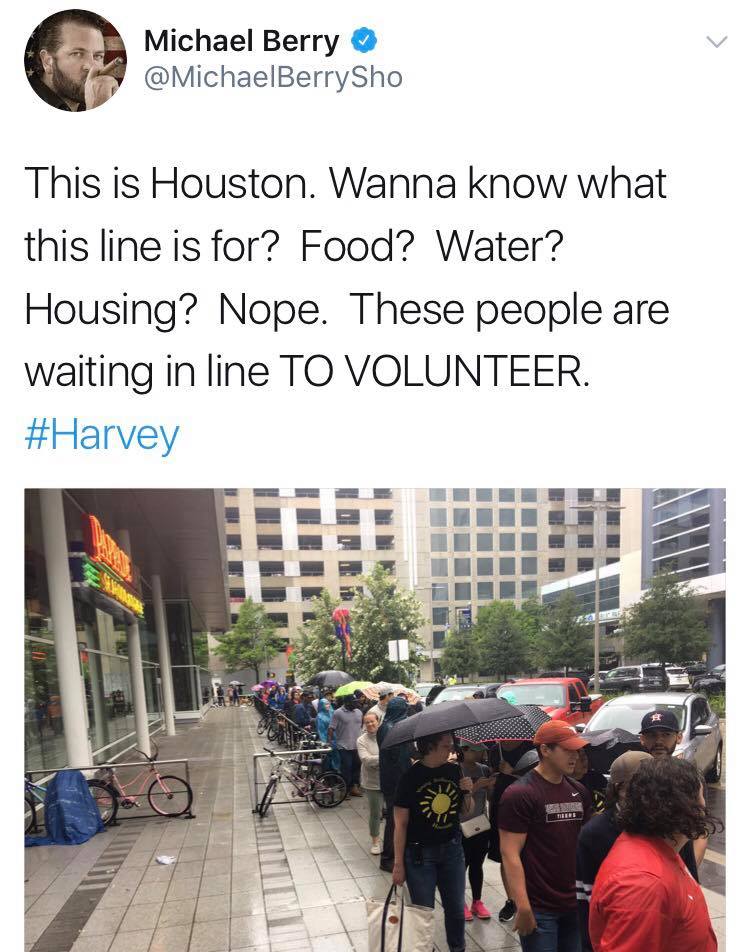
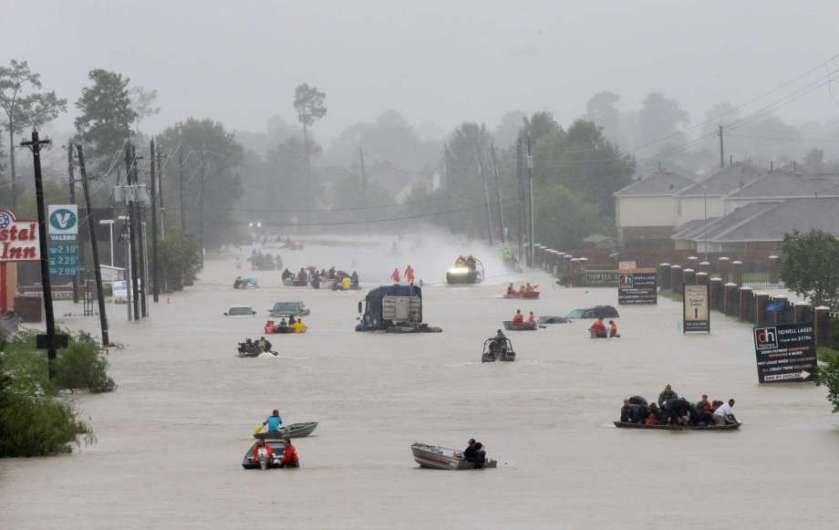
But it doesn’t stop there.  The Hurricane currently hitting the Gulf coast of Texas?  It’s racist:

… since no one is even talking about the potential racial and socio-economic impact of this storm, it’s doubtful that local and government officials will be thinking about it during the clean up, either.

It’s a shocking idea but perhaps not everything is partisan politics.  And not everything is identity politics.  Some things can actually happen without being political.

Unless, perhaps, one thinks that Trump combines the might of a storm deity and a celestial god in one:  kind of like Odin and Thor combined.  If that’s what you believe, well, we do have freedom of belief in this country.

But do you really want to ascribe to him that much power?


A Snippet from a Work in Progress

Attempted Mutiny!


The door to the captain’s cabin eased open silently.  A man in the passageway leveled a crossbow, loaded with a broad-headed hunting quarrel, through the doorway.  With the sharp crack of bowstring striking wood, the crossbow loosed the quarrel which buried itself in the rotund blanket-wrapped form on the bunk.

Kaila, from her position behind the door, grabbed the arm of the crossbowman and pulled.  He tumbled into the room.  With her other hand Kaila swung up with her sword catching the man just under the arm .  The sword bit deep.  Blood sprayed in pulsing spurts.

Kaila released the dying man and pivoted into the doorway.  She bared her teeth at the sight before her.  Men crowded the passageway, too tight-packed to fight effectively.  Her sword licked outward, stabbing into the groin of the first man, then the tip slashing across the throat of the second.  More blood showered the deck, splashing across Kaila.  She spat at the coppery taste and stepped forward, her foot landing on the back of the crossbowman.  Two more strikes and the bodies blocked her progress.  She kicked, shoving bodies back into the remaining men, inducing them to back away seeking room to fight where they did not get in each others way.  Kaila pressed forward, not allowing them that room.

As Kaila fought, her sword began to glow with a dim blue light.

The sound of impact from the hold beyond the passageway told her of the execution of the second part of the plan.  Marek and Keven, leaving no one at the tiller for the nonce, dropped from the hatch behind the crowd pressed into the passageway.

The next man got his curved sword up in time to block Kaila’s attack.  Kaila rolled her wrists and the point of her sword dipped, dropping below and around the man’s sword.  She stepped forward, thrusting into his ribs.  She jerked her sword free and stepped back, reaching up to wipe the blood spray from her eyes.

Beyond the remaining crewmen blocking the passageway Kaila saw Keven’s form shift.  Shillond, his seeming dispelled, stood in Keven’s place, fire burning at his finger tips.  The purser’s cabin door opened and Keven stepped into the passageway, Kreg’s sword ready before him.

Side by side, Keven and Kaila filled the passage, limited by the tight quarters to a thrusting game, but with the reach of the shashyns, more than a match for the remaining crewmen.  Keven’s sword pierced one.  Kaila’s another.

In the hold, Shillond reached out.  One of the crewmen’s clothes burst into flame.  Marek, struck the back of a crewman with a slashing blow before he could turn to face the new onslaught.

Kaila took a step forward, raising her sword to point at the face of the nearest man before her.  He looked down at the bodies forming a gruesome carpet on the deck.  He looked up.  His eyes met hers.  His hand opened.  His sword dropped to the deck.

In moments the remaining men, five in number, followed suit.  Weapons dropped, they clasped their hands before them and plead for mercy.

“There is but one penalty for mutiny,” Kaila said.

“Hold, Kaila,” Marek said.

Kaila stepped back. “Majesty?”

“As King of Aerioch, I claim your lives.  You will serve me without question–” He nodded to the bodies on the floor. “–or you will die.”

Nearly falling over themselves in the crowded passageway, the crewmen fell to their knees.  An incomprehensible babble arose as each man strove to declare, louder and faster than the next, his loyalty to King Marek, captain of this vessel.

Kaila schooled her face to stillness as blood soaked, and dripped from, her hair and clothing.


The above is from the forthcoming sequel to The Hordes of Chanakra:

$4.99 in Kindle Store, Free to read in Kindle Unlimited, $14.99 in Paperback

Pulled into an alternate world mired in the middle ages, Kreg finds allies in Kaila, a rough swordmistress, and her wizardly father. He’s also found their foes – an unending horde pouring forth from the small nation next door.

Now, he’s in a race against time to find the true source, before everything he cares about ends in fire and death!