Things I’ve Learned in the Ice Follies

It’s been just about a year now since I restarted figure skating after being away from it for something like 35 years. There are some things I’ve learned in the past yeas.

  1. Ice skating is not like “riding a bike”. It’s not something that you learn once and then can come back to after long layoffs and can still do it. I had to essentially start over.\
  2. t’s a lot harder when you’re older (had just turned 58 when I started last year. 59 now). I don’t [i]bounce[/i] like I did when I was 18. Falls hurt more. I get injured more easily. Recovery from injury takes longer. This means that I can’t push as hard as when I was younger and so have to balance how hard I can push, and therefore how fast I can progress, against enforced layoffs from pushing too hard and getting hurt.
  3. At least nine tenths of my difficulty with techniques I have learned (new ones I’m just learning have their own problems) can be traced stiff knees and ankles. This is a matter of flexibility and condition as much as anything else. Keeping flexed knees and ankles requires better condition in the supporting muscles.
  4. Be persistent and you [i]will[/i] make progress. When I started a year ago once or twice around the rink, with a break every half-lap to rest and let the foot pain decline to bearable levels. Today, I went a full 70 minutes (best guess–I did some work on the circle before I thought to check the clock) non-stop. And the foot pain (bad arches–just something to live with; my podiatrist does not think that custom orthotics for the skates are called for) was modest at worst. [i]Huge[/i] improvements over where I started.
  5. It may seem like it’s more “chore” than “pleasure” (see “twice around the rink, having to stop each half lap to let the pain subside”) at first, but with persistence, getting through those initial challenges, and you can find out how fun it is. I spent much of that hour plus with a grin on my face.
  6. You may think you’re getting good but there’s an eight year old girl out there who can skate rings around you and make you look like a drunk epileptic rhino. And that’s okay. You’re not competing with that eight year old girl. You’re facing your own challenges, the skater you were yesterday, or last week, or last month, or last year. (You can, however, tell the mother of that eight year old girl that her backward crossovers are so graceful and smooth that they are a thing of beauty. Because, really, it’s true.)
  7. Skating is an activity that, when done with even moderate competence, is so graceful that even big ugly guys (like me) look good doing it.

For a while there were two techniques that I was able to do when I was eighteen that I had not been able to do now: forward crossovers and T-stops. I am now doing them. Not just “practicing” them, but actually doing them as part of my skating if you get the difference. I still have to think about them. They’re not completely automatic yet, but when I get to the end of the rink and round to go the other way, I do crossovers. When I need to slow down because of traffic ahead of me, I T-stop.

Here’s a little video of me skating Sunday.  I’m hard to pick out of the crowd but I’m the one all in black with the elbow pads:

On the whole, I am very pleased with my progress.

“Forgiving” Student Loans

First off, let’s get one thing straight.  Unless a loan is owed to you personally, that you personally are on the hook for it not being paid, then you cannot “forgive” a loan.  You can only transfer it to someone else, someone who didn’t agree to be on the hook for it in the first place.

The claim is made that we should pay for these folks’ “college education” and pass their student loans on to people who did not agree to be burdened by said loans because the education is valuable and these people, with their college degrees provide value to the community.

If that were true there would be no “student loan crisis” because, if they really were adding value, they would be paid that value and…

Be. Able. To. Pay. Their. Own. Loans.

Oh, sure, there would be some few who ended up behind the eight ball, as it were. Guessing wrong on what future job prospects would be like and that sort of thing. It happens. But it would be the exception and not the rule because generally speaking in free exchange resources tend to go toward their most valued use (as determined by the choices of society at large).

The late Jerry Pournelle, back in one of the essays collected in “A Step Farther Out” noted who made the decision on which college departments and career fields got the most funding: entering freshmen. Whatever degree field they signed up for, that’s where the funding went.

In short, the people least qualified to make such a decision were making it.

If we must have government funded higher education (arguments can be made both ways on that) then would it not make more sense to make some kind of estimate of how many “X” (engineers, doctors, teachers, sociologists, pharmacists, what have you) we expect to need and divvy up the funding that way? Not to say I would trust the government to make such a determination (neither on competence nor on ethical grounds), but in principle it would be far superior to letting people with essentially zero life experience determine it for us.

Make them Infamous. (Update: Or not. They Fixed the Issues.)

capitalcityford

I am really, really pissed off at Capital City Ford in Indianapolis. Last April I had some rather extensive suspension work done on my ’05 Explorer (workhorse car that has generally been great for me). Less than a month later, on the way home from a night out the right rear axle nut comes off (parts they installed). I have the car towed to the shop, take an Uber home, and get a rental. They make the repair under warranty and they reimburse me my out-of-pocket.

So far so good. Things happen even at the best places and they did make it right.

Fast forward to this past Thursday afternoon. I go to get Athena from school. During this trip I get a warning that traction control has shut down and a flashing indicator on the dash (the “4X4 high” light blinking). Not good, but, fingers crossed, I get home.

When I do get home, I find that smoke is pouring out from under the left rear wheel well. Oh, so not good. I get the car up on a jack and remove the tire (lug nuts, even after the time it took me to get the car lifted, were too hot to touch bare handed). There’s grease sprayed around the inside of the rim and when I try to turn the rotor, it won’t move. I knock the brake caliber pack and forth a bit with a mallet to make some slack there in case maybe the brake pads were gripping but still won’t budge. It looks like the wheel bearing has seized.

Double plus not good. (Risk of fire?  Yikes!)

I take a look at parts. Money’s tight (as the fact that I’m having to do a fundraiser for my daughter’s service dog should indicate–If I could do it myself, I would) and this looks like a not-unreasonable DIY job so I look up what a replacement bearing would cost. Not too bad. Amazon can get me a bearing and hub assembly for under $50. But then I ask myself how long the warranty for the earlier work was and…I call the dealership where the work was done (Capital City Ford, in Indianapolis; do not forget that). The repair has a two year warranty. Excellent. I’m well within that.  I just need to get the car down to them. (I was advised later that what they should have done was immediately get a tow for me, and get me into a loaner while the warranty work was done.  But, I am perhaps too easygoing for my own good.)

I call several local tow companies. Cheapest is $125. Ouch. But then I think that I might have emergency roadside assistance via my insurance. I’m not sure but I call to ask. And, yes, as a matter of fact I do. While normally the coverage is only “to nearest qualified repair shop” I decline that and they have the towing company itself contact me to see what the charge would be and how much my coverage will actually cover. The result, completely covered. No out-of-pocket to have the car taken down to the shop.

Again, So far so good.

Tow truck driver tries to back the Explorer out of the driveway so he can load it up onto his truck on the street. Moves about five feet and stops. The wheel simply will not turn. So he backs his truck into my driveway (which blocks most of the street which was why he didn’t want to do that if he could have avoided it). He still can’t get the car to move, not safely, because that wheel is locked up tight. So he uses a gadget he called a “skate”, basically a plastic wedge with a concave upper surface that he shoves under the tire to make it easier for it to slide.

Next morning I call the shop. They hadn’t looked at it yet. I ask about a loaner. They need to talk to their manager. I call again. Same. I call later in the afternoon. Same. I have to go to the store so I use Lyft there and Lyft back I wait until I absolutely have to make a decision between getting a loaner from them or until I have to get a rental (basically, as late as I can and still get to the rental place before it closes). I go ahead and reserve a car online.

Call the dealer service department again. Oh, they won’t get to it until Monday. And they need approval from Ford to get me a rental and that can take…

I. Am. Pissed.

I am out more than $300 out-of-pocket (car rental, deposit on car rental, and the two Lyft rides) on what should be a warranty repair at no cost to me. Their screw-up has cost me that. Now, depending on how long I have to keep the rental, I can get some of that money back…eventually. But I don’t have it now.

It is far, far too late for them to “make it right.” The best they can do is mitigate how badly wrong it is.

Remember, that’s Capital City Ford, Indianapolis, IN. They screw up repairs and don’t make it right.

Make them infamous.

Update, 1/27/20

Well, finally heard back from Capitol City Ford, a dealer for Ford Motor Company. Definitely unhappy. Yes, the repair is warranty. “Doesn’t know what happened, maybe someone didn’t tighten things down properly.” In addition they found a leaking pinion seal with repair on that running about $200 (ish–I didn’t right down the parts and labor numbers and add them up). Estimate done by Wednesday afternoon.

  1. As a result
    1) I am out of pocket $400–car rental, deposit on the rental (which, at least, I should get back after returning it), and Lyft to and from the grocery store on Friday while waiting to hear whether the dealer would provide a loaner or not.
    2) Since I am out of pocket on that, I can’t afford to have them do the pinion seal. (Folk who follow me here know why I’m really strapped for cash at the moment.) Fortunately, that looks like a reasonable DIY project. Even with having to buy the special Torx sockets for the driveshaft and a bit 23 mm socket to get access to the seal it’s a lot cheaper than having them do it.

I have generally had good experiences with Ford and, indeed, the dealership I used to deal with before it closed down (2008-9 recession) was a joy to work with. But I am seriously unhappy with my experience here. But being out $400 now, of which I can only recover $200, plus the time and effort I’ve had to expend because their repair failed? No, not happy is an understatement.

Update 2:

Ford Motor Company said, in the end, it was really outside their bailiwick “While we try to encourage our dealers to provide courtesy loaners or rentals when possible, it is up to the discretion of the dealer”
On the other hand, very soon after that, my posting of the original issue on the dealer’s own FB page got a response that they’re fixing the pinion seal (leaking and not actually related to the warranty issue, just happened to be there too) on their own nickle and we’d go over my out-of-pocket to come to a “mutually acceptable agreement”.
Don’t know what was said where to have this come up–about tht best that can be reasonably expected at this point. I won’t get the gray hairs from worry and stress back but barring a time machine (Okay, okay, I’m working on it, but still, these things take time, which is ironic when talking about a time machine) there’s no way to do that at this point.

Update 1/28/20

I got my car back. Not only did they do the repair gratis under warranty, but they repaired the differential pinion seal and a couple of other minor things while they were there. The service manager had me forward the receipt from Enterprise so I’m hoping for that to be reimbursed.
 
I said up above that it’s too late to “make it right” and the best they could do was mitigate the level of wrong but the existence of other issues which they did not have to fix under strict letter of the warranty, and their fixing thereof, actually managed to make it right.
 
On the whole, I’m quite pleased.

Department of Education? Why? A Blast from the Past

In 1979, during the administration of President Jimmy Carter, the Federal Department of Education was created as a Cabinet Level department.  In the 40 years since then, we have spent more than $1.5 trillion on this department.  It was created  apparently to fulfill a promise Carter made to the National Education Association gaining their support during his campaign.

Can anyone honestly say that our schools are any better now than they were then?

cato_andrew_coulson_public_school_trends_2013

As the above chart shows, spending has been growing by leaps and bounds but the performance of the schools, as measured by the reading, math, and science scores of the students has not measurably improved.

One would presume that the purpose of the Department of Education would be to improve the education of American students so they would graduate possessing greater knowledge of core subjects like reading, math, science, and history.  One would presume.

Whatever the Department of Education is doing, it is not working.  The improvement has simply not been happening.

They have had thirty-eight years and one and a half trillion dollars to improve things.  They have had Democrat and Republican appointees both in charge.  They have had more liberal and less liberal Congresses passing budgets (or at least continuing resolutions).  They have had every possible chance to show that they can actually make our schools better.

They have failed.  It’s time to shut down the failed experiment.

Of course, advocating that evokes the cries of those who declare that education will collapse and we’ll suddenly have a nation of functional illiterates.  In many ways, we already have that.  But consider what we accomplished with education system more beholden to the local than the Federal level, before there was a Department of Education, before there was even a Department of Health, Education, and Welfare.  We educated a population that took us from horse and buggies to the sound barrier and beyond.  We educated a population that won two world wars, both of which involved significant technological advances.  We went from Congreve Rockets to Earth Orbiting Satellites, to Man in Space, to the Moon.  We educated a population that gave us the first sort-of reuseable spaceship (Oh, don’t get me started… But the problems were not educational.  The problems were political).  We did all that without federal meddling with people’s schooling.

What has been done, can be done.

Who has more interest in the education of a community’s children, than the community itself.  Will some fail in their charge?  No doubt.  But they will fail for themselves.  When the Federal government fails, it fails for everybody.

So, time and past time to get the Federal Government out of what should be a State, or better yet local, issue.  The money is wasted and accomplishes nothing good.

Empty promises and wishful thinking are not a substitute actual results.

Citizen’s United at Fifteen

citizen's united

And people are still frothing at the mouth about it. (Actually an update on a post from my old LiveJournal blog–but with enough new material that I’m not calling it a “Blast from the Past”.)

However, consider:

    • I decide to speak in favor of a politician or cause in which I believe.
    • I decide to buy ad space/time on TV, Radio, or Print media to favor a cause I believe.
    • I, and some friends who agree with me, decide to pool our resources to buy more time/space, or time/space in larger (or more) markets than we could do individually.
    • I, and some friends, decide to donate our pooled resources to someone else to do the kind of political activity I describe above on our behalf.
    • I, and some friends, decide to solicit money from others to do the same stuff I’ve just described.
    • I, and some friends, decide to organize into an association to do a variety of things, part of which is to make the kinds of political speech I just described.
    • I, and some friends, decide to pool resources and donate to an already existing organization that that will use those donations to engage in the same kind of political speech I just described.
    • I, and some friends, decide to pool resources and donate to an organization, specifically to the election campaign of a particular politician that is aligned with my views, so that he (or she or xe or whatever) can use it to engage in political speech for the purposes of winning an election and thus putting those views into practice.
    • I, and some friends decide to “sell” part “ownership” of the association which does a variety of things, including the political activity associated above and give them a vote, weighted on the amount they’ve put into the “pool” for the association, for folk to manage how those pooled resources are used.

At what point does the First Amendment stop applying and why? Why at all, and why that point?

People engage in speech, not organizations.  And organizations are made of people who do not lose their rights when organized in particular ways.  When you ban an organization from engaging in political speech, including the speech of buying ad space and the like, you aren’t stopping some “faceless entity”, but the people of that organization.

So, unlike the graphic at the start of this claims, corporations are people.  There are people, put in place by people, to make decisions on how the resources, provided by people, will be used.  It’s people all the way down.

I would say the same thing (and do, in fact) if instead of “corporations” the argument was about unions.  However, strangely enough, most of those who decry “corporate money” involved in elections tend to have no problem with unions and other organizations (that are just as far down the “list” above as corporations) and their money–so long as those organizations support ends that they approve.  Let the organization be in opposition to their views (the NRA for instance) and nope, that organizational money needs to be gotten out, out, out of politics.

The problem, as usual, is not that the organizations are spending money on politics.  It’s that government is so powerful, and so intrusive, that the influence that money can buy is too valuable to ignore.  When the decisions of some government bureaucrat, who will pay no price if the decision is wrong, can decide the fate of your entire industry it would be foolishness in the extreme not to pay however much is required to influence that decision.  And laws to restrict that spending simply drive it underground and mostly increase the cost of that influence restricting it to a smaller and smaller pool of wealthier influencers.

It may seem paradoxical, but the answer is to reduce the restrictions on campaign finance.  Make it open.  This will increase the number of people and organizations with different viewpoints who are able to be heard and therefore reducing the influence of any one particular special interest.

The other solution is simply to reduce the power and intrusiveness of government.  Reduce the value that influence over government has and people and organizations will simply be less willing to spend as much on that influence.

It’s called “freedom”, and it’s worth a try.


Live to Tell: One of my released stories

This was actually the first story I released “Indie.”  It’s set in the same world as most of my near future SF.  It’s a little Mil-SF piece:

$0.99 in Kindle Store, Free to read in Kindle Unlimited

The nightmares of the past become the terrors of today.

Staff Sergeant Mike Yamada is the only prisoner of war every recovered from the Eres. Although afflicted with debilitating PTSD he is the only source of knowledge on the real fate of prisoners of the Eres. When the hospital ship Mercy comes under fire from an Eres task force, Yamada must face his worst nightmares brought to life and must somehow find the strength to rise above his fears lest that dread fate befall not only him but the remaining crew of the Mercy.


STAFF SERGEANT MIKE Yamada saluted as he stood in front of the Captain’s desk.

“You wanted to see me, Sergeant?” The Captain returned the salute. “Well, here I am.”

Yamada winced inwardly at the tone of the Captain’s voice, a wince that he was careful to avoid showing as he stood at attention before the Captain’s desk. He could understand why the Captain was upset, but that did not make what he had to do any easier.

“Yes, sir.”

“Well?  In case nobody’s told you there’s an Eres task force on our tail and it doesn’t look like we’re going to get away. The crew of this ship, including me, is about to get very busy.”

“Yes, sir.” Yamada paused a moment. Despite the Captain’s sarcastic comments, he could not have avoided hearing the announcement. The hospital ship Mercy and her two escorting destroyers were currently running for the system’s jump limit at the maximum acceleration the Mercy could sustain. And although there had been no general announcement of the assessment of the Eres fleet’s capabilities, he had also heard the scuttlebutt that gave the Eres longer legs–enough longer that the Mercy could not possibly reach the jump limit before being overhauled. The destroyers could probably get away, but they would not both leave the Mercy. The more seriously sick and wounded were being moved to the Soyokaze, the newer, and faster, of the two destroyers in the hopes that they, at least, could get out. “First off, Sir, I’m sorry about what happened….”

Since his rescue, Yamada had gone into screaming fits whenever anyone approached him. One corpsman had tried to restrain him and received a dislocated shoulder for his pains.

“The corpsman’ll be fine.” The Captain sighed. “At ease, Sergeant. Post Traumatic Stress. I’ve seen a lot of it in this billet. You’re not at fault here although I’m glad to see you’re finally getting past those panic attacks. But I don’t think that’s all you wanted to see me about, was it.”

“No, sir. Uh, sir–” Yamada shrugged– “whatever happens, you can’t surrender this ship.”

“Can’t I?” The Captain leaned back in his chair. “And since when do you tell a ship’s Captain what he can and can’t do?”

“Sir, I’m sorry, but you just don’t understand what will happen if you do.”

“The Eres are good about taking prisoners. If they weren’t, you wouldn’t be here.”

“That’s just it, sir. It’s better… better not to be taken prisoner. Anything… anything at all is better than to be taken prisoner.”

The Captain nodded. “I’m sure you’ve had a bad time, but you’re here, now, in reasonably good health, when you wouldn’t be if you’d followed the advice you’re giving me now.”

“And a lot of the time I wish I wasn’t, Captain. You have no idea, none at all, what it’s like.”

“Look, Sergeant, I haven’t got time for this.”

“Please, Captain. Please listen to me. You may have heard of an old story ‘The Most Dangerous Game’?”

“Can’t say that I have, but….”

“Well, I don’t suppose it matters. Look, after Defender was captured and we were taken to a POW camp, or what we thought was a POW camp, we were treated well–good food, clean housing, exercise yards, excellent medical care. It was only later that we found out why.”

###

“Move your ass, Lieutenant!” Yamada punctuated his statement with a shove.

Lieutenant Thompson responded by sinking to the carpet of leaves on the ground. His right leg bulged purple above the remains of his boot. “I’m done, Sergeant.”

Yamada squatted next to Thompson and grabbed his shoulder. “Done, hell!  On your feet and get shagging… sir.”

Thompson shook his head. “Not going to happen. You’d better clear out before they catch up to us. They can’t be too far behind.”

“Lieutenant….”

“That’s an order, Sergeant. If you stay, they’ll just get both of us.”

“Sir, I….”

“Move your ass, Sergeant. That’s an order.”

With a groan, Yamada scooped up the sharpened stick that served him as a crude spear and dashed into the underbrush. Once through the nearest thicket, he hesitated, then turned and crouched behind a tree. He could just see Lieutenant Thompson straightening his injured leg on the ground in front of him.

A noise from the far side of the clearing drew Yamada’s attention. Two Eres appeared almost as if by magic from the shadows under the trees. Instead of the standard issue magnetic slugthrowers, they carried long spears, the shafts of a local plant similar to Earthly bamboo and tipped with flaked stone.

Yamada’s grip tightened on his own, cruder, spear as he watched Thompson wait for the approaching Eres.

Adult Eres stood just under 2 1/2 meters tall. Their smooth skin varied from a pale olive green to a straw-amber to a deep russet brown. Their heads, perched on the ends of half-meter long flexible necks, had rounded skulls that stretched forward into blunt snouts, giving them an egg-shaped appearance. Tall, narrow ridges, the crests whose height was the only visible different to Yamada’s eyes between male and female Eres, ran from just over the eyes back across the skulls to join just above the back of the neck.

A lipless mouth bisected the snout horizontally where knife-edged serrated teeth were constantly exposed in a mirthless grin. The upper and lower teeth overlapped, producing a shearing action to cut through flesh or the Eres could thrust forward their lower jaws, turning upper and lower teeth into pairs of saws that could carve the stoutest bones.

The Eres bodies were rounded, almost bulbous, with arms that seemed short in comparison to their full size but were, in fact, about the same size as humans and no human could match the strength of an average Eres arm. The legs were about a meter long, with elongated, clawed feet. Eres walked on their toes, with a spine from their heels pointing backward. The hips had a second, locking joint that allowed the Eres to either stand and walk fully upright like humans or to shift into a forward-leaning position where the weight of their heads and bodies were counter balanced by a thick, muscular tail. In this position they could run at great speeds for seemingly unlimited distances.

One of the two Eres–a female by the crests above its eyes–stopped. The other took two more steps then stopped as well. He–the smaller crests indicated a male–raised the arm that held his spear. The arm whipped forward and the spear flew in a near invisible blur to bury itself in Thompson’s chest, just to the left of his sternum.

Yamada screamed. Without conscious thought, he charged from his own place of concealment straight at the Eres who had killed the lieutenant. The Eres turned to face him, the male who had cast his spear blocking a clear throw from the female.

In another instant, Yamada reached the Eres. His own spear, driven by the full momentum of his charge, caught the Eres in mid-torso. Yamada found himself tangled with the Eres’ body as it fell.

###

“I thought I was dead then,” Yamada told the Captain. “An adult Eres masses more than 200 kilos and that world had a little bit more than one standard gravity. I was pinned as the female walked up to me. I expected her to spit me just like they had the Lieutenant. But all she did was club me unconscious so that I woke up back in the camp.”

The worst part of that episode had been learning that the Eres he had struck had survived. His spear had pierced one of the Eres’ hearts, but while that was a serious debilitating injury it was not necessarily fatal. Given time, an Eres would recover and the heart heal, weakened perhaps, but not fatally so.

The Captain leaned back in his chair. “You made an escape attempt on a planet held by the Eres?  That took guts.”

“You don’t understand. It wasn’t an escape attempt.”

“It wasn’t?”

“They let us out so they could hunt us. That’s what they do with prisoners–feed and care for them so they’re at the peak of health and strength, then hunt them down and kill them.”

“My God,” the Captain whispered.

“They love a challenge,” Yamada continued, “I came to learn that if you’re good enough, or lucky enough, if you wound or kill one of the hunting Eres, or avoid being caught long enough, they often won’t kill you. Instead they’ll bring you back in, nurse you back to health, and send you out there again for another hunt.

“We weren’t prisoners, we were livestock. I think this whole war is just a great hunt to them.”

“Thank… thank you for your report. Now, if you will return to your quarters, I have a ship to run.”

Yamada saluted and left.

“Some people deserve more than…”

nomicdrop

Over in another forum someone arguing for socialist policies (the explicit argument was for estate taxes) made the following argument (and thought it was a “mic drop” since a number of writers were on that forum):  “I know a lot of very intelligent writers who have not been rewarded commensurate with either their talents or contributions” This is the tendency that Thomas Sowell points out frequently where when people talk about “worth” they talk about what they think, as third parties, not part of the transaction, think something should be “worth.”

Now, I am one of those writers and I would certainly like to make more money, but, well, read on…

The only people whose opinion on the “worth” of a transaction matters are those directly making the transaction. So long as the transaction is voluntary (no coercive force used) then the transaction will only take place if both gain more than they give by their own values. (And that’s the key…”by their own values”, not values someone else assigns for them.)

The Dell gaming laptop I’m typing this on? I bought it because the computer was worth more to me than the money I paid for it. Dell sold the computer to me because they valued my money (or more specifically what that money could buy) more than they did the computer. Someone outside might decide that the money I spent was worth more than the computer “should” be worth (by their values, which simply means they wouldn’t be willing to spend that much for it) and thus Dell “cheated” me.

But, the simple fact is, Dell (and it’s stockholders by extention) has lots and lots of money not because they “took” it from others but because they provided goods that people valued more than the money they paid Dell. Yes, Dell has a lot of money. But those people have goods and services that are worth more to them than the money was.  People look at Dell and see “big corporation” with “lots of money” (and its stockholders as wealthy because of it).  They don’t see the lots of people who in turn gained wealth (to the tune of a computer that was worth more to them than the money they paid for it) because they are spread out throughout the economy.  One’s concentrated and thus easily visible.  The other is diffuse, and thus not so visible.  A classic example of Bastiat’s “Seen and unseen.”

Now, let me touch base a bit on the writing and “deserve”. It works the same way there.  People buy my stories if they think they’ll get more value (in terms of the enjoyment they get from reading them) than is charged by the vendor.  I tend to keep my prices low because I’m trying to build readership.  But that “more value than the cost” thing has a couple of factors involved.  First off there’s how well I’m able to convey the value they’ll get–the cover art, description (blurb), right choice of categories, and so forth that give people an idea of what kind of story it is.  The other big factor is simply making people aware that the story exists, to get it in front of people who might then look at those initial bits (cover art, description, etc) and decide whether they want to part with some of their hard-earned money for the bit of entertainment I provide.  And I’m not just competing with other science fiction and fantasy books, but with anything else that might provide some entertainment to the consumer.  I’m competing with Amazon Instant Video rentals, with a six-pack of cheap beer (or maybe a couple of bottles of better beer), with a few minutes of Laser Tag, or with whatever else the person might spend that money on.  I have to serve their needs better than whatever else they might do with that money instead.  Somebody might think my writing is the best thing they’ve ever read.  Drama, pathos, a truly satisfying conclusion, all wrapped around concepts that are worth pondering. (Or, maybe not.) But that they think that doesn’t impose a duty on others to think likewise and shower me with money (although if you’d like to do so, then, please.  Can never have enough). No, that’s a decision each individual has to make.  Is this item, right here, right now, worth to me what I’m being asked to pay for it?  If and only if the answer is “yes” does the transaction happen.

My odds get better as more people become aware of my work, but in the end it remains a matter of do I please my potential customers?  Neither more nor less.

That’s what happens when I, or anyone else, deals with a private business that doesn’t have coercive force a available to make me do business with them.  Let’s look at what happens in the case of government.

When I deal with the government, well, what I “get” is, frankly, worth a lot less to me than the money I spend. Third parties, may try to explain why it “really is” “worth it” but they’re simply imposing their values on me.  They act as if, and indeed seem to believe, that their values are somehow “better” and “more worthy” than mine.

Unlike dealing with Dell, I can’t simply say “no, that’s not worth it. I’m not buying.” If I tried, the government would use coercive force. I.e. the government would send Men with GunsTM to force me to pay or, in the extreme of non-compliance on my part, kill me.

So, I pay, even though I do not receive value for the money. Or, rather, the “value” I receive is not being imprisoned or killed.

“You Can’t Fight the Military with Rifles” A Blast from the Past.

Given the events in Virginia, and some government folk talking about how the Military would just “crush” civilian gun supporters, well, this was appropriate to revisit.
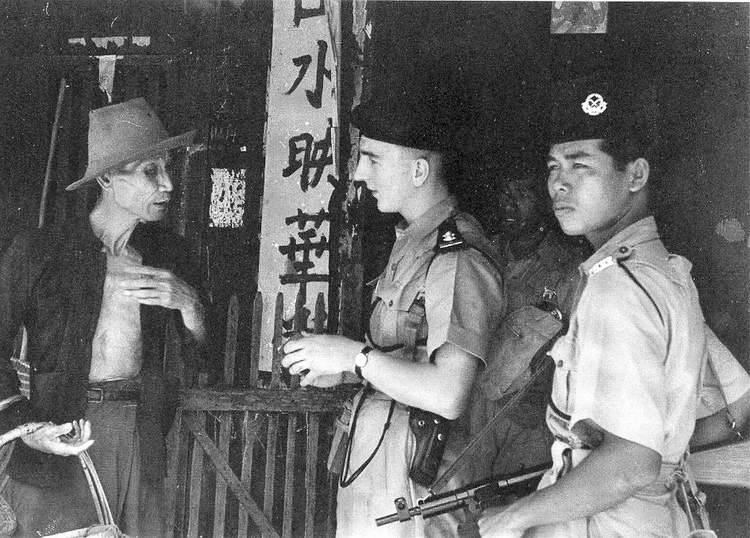
Police_in_Malayan_Emergency


I had intended to write a blog post on that subject sometime, but as it happens my friend Michael Z. Williamson did one today. [Ed.  That would have been the date of the original post]

Reposted with permission:


It’s almost always civilians who say this based on their non-experience in the military.

First of all, it would terrify me to believe that there was nothing I could do to stop an invader or rogue government. But apparently, they fear me more than it, while believing I’m impotent to do anything about it.

I would suggest anyone with this combination of neuroses seek mental health help.

But moving on.

To believe that lightly armed forces can’t defeat a government one has to believe that the Vietnamese lost and the Iraqis didn’t tie up the US Army for a decade.

Let’s start with the concept of an invader.

Said invader is likely at the long end of a supply chain. (Canada is not a likely invader, nor Mexico.)

Now, even if we accept the claim that very light infantry can’t do anything effective…it can be a screening force for the military members who can. Every veteran or trained hunter with a rifle acting as support, perimeter security, reconnaissance and facility guard is one more active duty troop freed up to engage.

And they are far more effective if they have commonality of ammo, magazines and parts with the regular forces. AR-15s don’t have quite the same internals as M-16s, but the pins, springs and accessories are interchangeable, as are ammunition and magazines. Suddenly, the US Army has a potential 30 MILLION more basic Riflemen.

But the claim they can’t do anything effective (beyond what we’ve shown) is false.

Rifle fire is just fine for harassment of troops in garrison, ongoing casualty infliction among support elements, and more importantly, their administration.

An invader, once amongst the populace, has limited options. If his goal is simply to destroy the nation, then there’s no reason to waste time within anything below strategic weapons. But what point does that serve?  And if that happens, with no subsequent invasion, then the utter chaos, collapse and starvation that will follow dictates that being heavily armed is among the top survival priorities.

If his goal is to transform the nation, he must have offices, bureaucrats, support personnel. Almost none of those will be military, nor armored, nor armed. They will have to drive or walk the streets, and they can be assassinated easily with rifles.  Rifles being better than pistols, because even a 100 meter head start greatly increases survivability. Semiautos being better than manual actions, because an area can be saturated so that even if the target dodges, he is more likely to be hit.

Keep in mind that a few dozen active PIRA/IRA shooters and bombers kept entire British regiments tied up for decades. A lone rogue cop kept four departments in the LA area tied up for a week. Two bombers in Boston crashed the economy and stopped the city for three days.

Can the invader secure a port on the coast, with air support and materiel ships and a garrison?  Possibly.  Can he move inland with patrols? Yes, while taking horrific casualties.  Can he roll convoys in and establish inland garrisons? Not without great difficulty, coming back around to that “you destroyed what you were trying to claim” problem.

What about his tanks and planes?

What about them?  First they have to get here, then they have to have a secure facility. Modern planes are very susceptible to damage. Rifle fire can destroy engines, airframe integrity, avionics. It can kill all the necessary support personnel–up to 100 per craft.  This means the aircraft must be outside of rifle range of the perimeter, or protected by a revetment constructed by engineers. Those engineers and security are susceptible to rifle fire, while any remaining operational military elements bring mortars or drones into play.

As far as tanks…they have to have a place to laager every few hours, and the tankers have to get out.  Then they’re as susceptible to attack as any other troop.  And that laager will need security and a perimeter. This gets insanely expensive very fast, as many liberals have noted with the operation in Iraq..which they insist the US lost.

No other nation has that ability to project force.

And even if they do, they rapidly lose any possibility of “winning hearts and minds” and are back to the problem of having to destroy the nation, its population and its resources and infrastructure, in order to conquer it.

The arithmetic is simple:  Even if a nation the size of China could mobilize all 5 million troops into the US, the 100 million armed American households, with potentially 2.5 rebels each, means it’s possible for the US to soak up casualties 50:1. Even if major population centers were nuked first, we could manage 20:1, and we’d pick the softest targets first.

Then, when our partisans do eliminate a tank element, or ground unit, its weapons then become ours, and we’re no longer “fighting tanks with rifles.” Because we have diesel mechanics, electronic experts, and rifles.  Will they be as effective as a professional force? No.  But they’ll be effective enough to tie up yet ANOTHER armor unit trying to stop them, which will pin that unit in place for even more harassment and attack.

It is simply ridiculous to claim an invasion is realistically possible.

Now, this doesn’t mean we don’t need those rifles.

Let’s move to a repressive government in the US.

This is not likely to be a fast process.  However, we’ve seen increasing asset forfeiture, denial of due process, corruption, violation of rights.  If it continues unchecked, it’s possible to conceive of a point where the average American will decide enough is enough.

And part of such process is making it harder for the population to resist. Which includes gun control.

One of Diane Feinstein’s arguments for her desired ban on .50 caliber rifles was that they could be used to attack armored cars the police use.

So the question becomes, for what purpose do the police need to send an armored car to my house?

And for what purpose might an even less facilitating government do so?

And if the first argument is armored cars, then what about body armor?

Quickly, the safety of government agents becomes more important than that of the citizens it is supposed to serve.

Well, such a government is not going to send any fighter planes. First, they’d have to find a pilot willing to bomb US civilians, and if they can find that, you better get every weapon you can into the hands of every person you can.  Because that means they’re willing to blow up your house and damage or destroy your neighbor’s house in the process to get you. What kind of crime could you possibly have done to merit that?

As far as tanks, those require a tank hauler to deliver them to the location.  If they’re sending that down the road to an American citizen’s house, for any reason whatsoever, it better have an armed convoy, because I guarantee, I don’t care what crime you may have committed, that is far beyond a reasonable response and I’m going to try to stop that convoy with roadblocks, caltrops, rifle fire, and whatever else. It’s very likely that after you, it’s going to be me anyway, so I may as well get the party started. And I won’t be the only one.

Seriously, what world do you live in where you believe the government could or should use that kind of force, and you’re not offering to pre-register with the resistance? Do you hate any of your fellow men that much?  Do you not see a problem?  Or do you in fact endorse that kind of despotic force? Because the way some of you toss it out there makes me wonder.

Do you see my problem?

And if it comes to that, we’d be back to the position where it’s time to shoot every bureaucrat, every manager, every secretary of that kind of government.

But that’s actually the second part of the problem.

Here’s the first part:

US Constitution, Article 1, Section 8.

The Congress shall have power …
To declare war, grant letters of marque and reprisal, and make rules concerning captures on land and water;

Read that again, if you haven’t read it before.  Congress has the power to license WARSHIPS that are not part of the US Navy.

This means privately owned warships, WITH CANNON were common enough in 1789 that it was worth writing a rule for their usage.

Quite a few artillery units through the US Civil War were privately owned.

Now, warships are pretty expensive these days…but old torpedo boats can be had for $50,000, and people do own tanks and aircraft with disabled weapons, as well as artillery pieces.

And my question is, why do they have to be disabled?

Well, that comes down to the National Firearms Act of 1934, declaring that such things had to be licensed, both the weapon, and every individual shell, at $200 each.

Then in 1968 there were a few more restrictions.

Then in 1986, the so-called “Firearm Owners’ Protection Act,” which does nothing of the sort, made it illegal to manufacture new machine guns for civilians, even with the tax and license.

So your argument is, “We’ve already violated this amendment to the point where all you have are very basic infantry weapons, and now we’re claiming those aren’t effective without the stuff we’ve already banned, so it’s reasonable to ban that, too.”

And I’m saying, we need to fix the entire problem, which we both recognize, and eliminate those laws so veterans (and determined civilians who for whatever reason were unable to serve), can have the weapons they need so we CAN fight tanks and planes in such an emergency.

The only people who could possibly object are the kind who want to send tanks and planes against civilians.


On This Day: The Battle of Golden Hill.

Battle of Golden Hill — 19th century print

Many people think that the American War of Independence happened suddenly.  On the 17th of April 1775, we were grumbling but at peace.  On the 20th, we were at war. (Worse, folk think everything was fine on July 3, 1776, but on the 5th we were at war.)

However, the build-up, including violent clashes, had been going on for years before it turned into open warfare.

The Battle of Golden Hill, which could be considered the first blood spilled in the American revolutionary struggle, happened on this date (January 19) in 1770, five years before Lexington and Concord, before the “Boston Massacre”, before the “Tea Party”, before many of the events that we consider harbingers of the rise in rebellion of the American colonies.

The issue started several years before that, shortly after the Stamp Act, which had given the “no taxation without representation” idea its impetus, was repealed.

On May 21, 1765, the Sons of Liberty, a group dedicated to agitating for liberty in the colonies and their “rights as Englishmen” (Remember, at this time the American colonists thought of themselves as British, not as people of a new nation), erected a “Liberty Pole to commemorate the repeal of the hated Stamp Act.  (Note, another source claims the pole was erected on June 4, George III’s birthday.)  The pole carried with the words “King, Pitt, and Liberty”. Pitt, was the individual in Parliament who argued the colony’s case.

British officials hated the pole and soon, in retaliation for New York’s government refusing to enforce the Stamp Act, cut it down.  A second pole was quickly erected.  This, too, was soon cut down.

A third pole was put up which the British, no doubt with much shrugging and shaking of heads (“those crazy Colonials just will not give up”–some British officer, probably).  It remained until 1767 when New York celebrated the repeal of the Stamp Act.  British officials, in response to this, had this third pole cut down.

The colonials, undeterred, put up a fourth pole.  This one secured with iron bands to make it much harder to cut down.

Not long after the erecting of the fourth pole, Parliament passed the Quartering Act, requiring people in the colonies to provide housing for British troops in excess to their local barracks’ capacity. (If you’ve ever wondered why the 3rd Amendment is in the Bill of Rights.  This is the reason.) New York, once again, mostly refused to enforce that law.  Parliament responded by dissolving the New York government and installing one of their own.  The Sons of Liberty responded to this by posting a broadside (basically large posters) titled “To the Betrayed Inhabitants to the City and Colony of New York.” All of this took time, and brings us to the beginning of 1770.

On January 13, 1770 the British military attempted to bring down that fourth liberty pole, using gunpowder (because of the iron bands).  This attempt failed but a second on the 16th succeeded.  They took the wreckage of the pole and dropped it on front of a tavern owned by a Mr. Montagne–where the Sons of Liberty were wont to meet.  They then began their own campaign of broadsides, calling the Sons of Liberty the real enemies of society who thought their freedom depended on a piece of wood.

On January 19th several individuals, including one Isaac Seares, tried to stop some British redcoats from posting their broadsides.  Seares managed to capture some of the soldiers while others ran to their barracks to call for reinfocements.  Seares marched his prisoners toward the mayor’s office.

The reinforcements, numbering about twenty men, arrived, but so did a crowd of townsfolk.  The townsfolk badly outnumbered the soldiers and surrounded them.  Other soldiers attempted their rescue but were ordered back to their barracks.  While being escorted back to their barracks they had reached Golden Hill when an officer ordered the soldiers to draw bayonets and “cut their way through them.”  The soldiers were armed with their bayonets while the citizens were either unarmed or armed with makeshift weapons.  According to one source those citizens with sticks stood their ground in the narrow passageway defending their defenseless compatriots.

While the scuffle was going on, more soldiers arrived to disperse the other soldiers before things got totally out of hand.

In the end several soldiers were badly bruised with one being seriously wounded.  A number of the townsfolk were wounded.  Some sources claim that one townsperson was killed but this is disputed.

Afterward, the Sons of Liberty asked the Mayor for permission to erect a fifth Liberty Pole on public land.  This was denied.  As a result, the Sons of Liberty bought a parcel of land where they erected their pole.  This one had iron bands extending two thirds the way up the pole.

Also, for some strange reason, this fifth pole lacked any mention of the King (or of Pitt).  This one simply said “Liberty and Property.”


If we don’t Redistribute Wealth…

…then a few oligarchs will end up controlling everything.

distribution

This idea, that without “wealth redistribution” (and Socialism/Communism) all wealth will soon end up in the hands of a few oligarches with the rest of us destitute is pure Marxism. (See Thomas Sowell’s book “Marxism” for details–note that Sowell was a Marxist for much of his youth.) It misses important factors. One is that the various goods and services that are popular, that the people at large value, changes over time. Another is that there’s a constant pressure to develop new, more economically efficient, means of bringing goods and services to the market. And when new ones arise, the folk invested in the old ones are rarely the ones to take advantage of them.

John D. Rockefeller cut the legs out of both the whale oil industry (and may be responsible for the survival of several species of whale long enough for groups like Greenpeace to even think about the idea) and rival petroleum companies by coming up with cheaper ways to produce kerosene, like making it several times cheaper.

Andrew Carnegie did much the same for Steel.

Then there was Henry Ford doing the same for the automobile.

James Cash Penny was a serious wakeup call to previous retail giants Sears and Montgomery Ward (mail order giants) with his chain of department stores that improved transportation (the automobile) and the growing network of roads made possible.  He got his start working literally for free just to “learn the business.”  Turned that experience into a major retail empire.

Sam Walton turned the retail industry on his ear. Came out of nowhere to, in a relatively short time, become the supreme retail giant in the US.

Ray Crock took an unknown little hamburger shop and turned it into a Giant.

Jeff Bezos of Amazon. Elon Musk of Paypal, Tesla, and SpaceX. Both folk who came essentially from nowhere to become billionaires building huge businesses that nobody predicted before.

I remember when “Cyberbooks” was a cute science fiction idea by Ben Bova. Now, well, now I carry an entire library in my shirt pocket–literally, more books than some of the rural libraries that I dealt with as a kid had on the shelves. And online? Have you browsed Project Gutenberg?

All of that stuff sprang up, all ended up “reshuffling” the wealth “deck.” New people, producing new forms of wealth and accumulating wealth as a result. Older things falling out of favor and losing share in the overall economy leading to people moving from failing industries to newer growing ones.

And all the rest of us?  Even the poor know wealth that John D. Rockefeller couldn’t even dream of.

At any given time, there are a few people who own a lot of wealth.  Some more who own somewhat less wealth.    And all the way on down to the “poor.” However, the “poor” of today aren’t the same as the “poor” of yesterday.  Those earlier poor did not have air conditioned apartments, cars of their own, cell phones, access (through their local library if not themselves) of computers and internet connections.  Those earlier poor did not have obesity as a primary health problem.  It took a bit of “sleight of hand” promoted by Marx (which didn’t originate with him; indeed, it seems that very little actually originated with him and he stole freely from others who today are far less well known) that someone can get poorer, even with a higher standard of living, so long as their “share” of the total wealth of society is lower.  A nice trick to ensure a never-ending supply of people who can complain about their lot in life no matter how much it has improved over times past.  Weaponized envy.

In any case, the idea that without the action of government wealth will gravitate to a few hands leaving the rest destitute is utter tripe. Free enterprise and voluntary transactions never worked that way. The only thing that works that way is coercive force.  And government is, by definition, coercive force.

The conclusion is left as an exercise for the student.