Feeding the Active Writer: Chicken Curry (Sort of)

A quick (in terms of prep time) sort of chicken curry (all ingredients are “-ish”–I didn’t measure precisely):

  • 5 lbs boneless skinless chicken breast.
  • 2 cups chicken broth
  • 1/2 cup apple cider vinegar
  • 2 tbs xantham gum
  • 2-3 Tbsp garlic powder
  • 1 Tbsp onion powder
  • 1 Tbsp red curry powder
  • 1 Tbsp turmeric
  • 1-2 tsp ground coriander
  • salt to taste

Toss all the ingredients in a slow cooker. Oh, you can cut the chicken into pieces if you want but it’s not necessary. It will fall into shreds at the end anyway. Cook on low for about eight hours. Stir.

Serve over whatever “base” you wish. I use riced cauliflower.  Top with the garnish of your choice.

Tasty. It’s a very mild curry as it stands. One can add more spices if one wants more “heat”. I probably would in the future but that’s for my taste.

Since the local Kroger sells chicken breasts in packs of about that size at a ridiculously low price it’s cheap too.

“If You Don’t Like It, Move” A Blast from the Past.

a-buy-me-a-coffee-987096_640

People tend to get upset when you suggest that if they like a particular government or form of government so much that they should go where they already have it.  I can understand that.  It’s a lot of trouble to pull up stakes and relocate to someplace that would supposedly be more congenial.  Of course it’s also a lot of trouble to force the changes that one might want on the unwilling here.

OTOH, America was built on that very concept of “if you don’t like it, move.” The Pilgrims wanted a place where they could raise their families without other religious influences (not for religious freedom–they had that in Amsterdam) so they moved.  Daniel Boone thought that first South Carolina, then Kentucky was getting too crowded, so he moved.  Other folk wanted a piece of land to call their own where they could build a life of their own so they moved.  Folk wanted economic opportunities they weren’t finding at home so them moved.

“If you don’t like it, move” is one of the foundations of American history.  Yet there is a problem today.  Today the folk more likely to actually follow that philosophy, the folk who want social and economic liberty, the folk who want to live and build their own lives with the minimal interference of government, don’t have anyplace to go.  There are no more frontiers into which they can expand.

Other folk, however, folk who want the government to “look after” them, can find endless examples of just what they say they want.  There are all sorts of options which have “government health care” and extensive “safety nets” and so forth.  But these same people, the ones who could find a “better life” in terms of what they say they want are the very ones who are the least willing to actually pick up stakes and move to where what they say they want is already available.

People have said to me “If you like guns so much, go start a country where they’re allowed.”  To which my answer of course is, “We did.  You’re the one set on changing that.”

Personally, I’d move in a heartbeat if . . . if . . . there were any place to go.

There. is. no. place. I. can. go.

Is it really too much to ask to leave one place on the planet where individual liberty, individual responsibility, and conservative/libertarian (small “l”) values are given more than lip service?  Just one?  Why are you so adamant to take away the last place on Earth where what I value is given any more than the barest lip service (and even that not much these days)?

Oh, some wags will give me a snarky “if you hate the government so much, move to Somalia.” However, what I want is a Constitutional Republic of sharply limited powers where maximum individual liberty is the goal and only such government as serves that goal.  “To secure these rights, governments are instituted among men, deriving their just powers from the consent of the governed.” At no point in there did I say that I wanted to live in a failed state controlled by competing warlords whose power is near absolute within their particular territories and where I can be quite sure the “international community (read “France and Germany, mostly Germany”) would be sure to intervene to prevent me from actually doing what would be necessary to build the kind of state I want to live in.

Please, just leave me one place where I can live my life in peace.  Just one.

Falling behind on this blog.

I’ve been falling a little behind on this blog.  Home crisis.  So let me use tonight’s to post the latest update on the fundraiser for my daughter’s service dog (which is a big part of the “home crisis” issue):

https://www.gofundme.com/f/help-athena-get-a-service-dog

Saw the doctor yesteray specifically about my daughter’s seizures (which she’s been having nearly daily). We also talked about her PTSD and depression issues but mostly it was about the seizures. As in two and a half hours of which two was about the seizures a half was everything else.

The good news is we’ve got some “official documentation” for the school she attends to know how to treat them when they occur. When/if they need to call emergency services, and when they don’t.

However, one of the things they pointed out is that her having non-epileptic seizures does not mean she might not also be having epileptic seizures as well. This is something we need to discuss with another specialist. Hopefully, this is just precautionary.

Fingers crossed.

Athenaballet
My daughter with her ballet class–one of the activities she’s had to stop because of, among other things, the seizures.

My Life, Part 5, Space and Dinosaurs and Assorted Other Stuff.

prehistoric-68074_640

As I mentioned last time, I had to re-take 2nd grade.  As one can imagine, I blew through the second time (after all, I’d already covered that material right?).  But the big advantage was my teacher was not Miss Faircloth.

Also as I’d mentioned, I was infatuated with space and the idea of space travel.  I read everything I could get my hands on about it, which mostly meant the entries on stars, planets, the space program, and the like in the World Book Encyclopedia and Book of Facts and in the included Childcraft books. (Damn, I miss those still.)

It was also about this time that I became infatuated with dinosaurs…as many a young boy will.  When we had time to go to the school library, I went straight to the section on dinosaur books and grabbed what I could.

My reading was far and away above grade level (even discounting that I was repeating a grade for that very reason) and I swotted up “science stuff” like a sponge.  I loved it and that was reflected in how quickly, and how much, I picked up.

I gained a few friends in this period.  I also ended up getting bullied a lot, to the point of being beat up with disturbing regularity.  Part of the reason was my own social awkwardness issues.  Another part was that I stood out as being the “brain” in class (yes, despite repeating a year).  “Beat up the geek/nerd” has a long history it would seem.

When I told Bruce this and, in frustration and anguish I wished aloud that I could “get rid of some of that knowledge” (which I saw as the prime reason I was being picked on–not recognizing the “social awkwardness” angle). Bruce’s response was “You don’t know anything.  Would you like me to snow you under?” I had no idea what he meant by “snow [me] under” but, in retrospect, this incident shows me just what a crappy father he was.  And, indeed, as I’ll get into shortly, he was a crappy human being.

Christmas in the new house I’m not sure which one–first time through 2nd grade or second–“Santa” left me the one present I remember from that era:  a Huffy bicycle in bright purple with 16″ wheels, “high rise” handle bars, and a banana seat.  Somewhere along the line the smaller bicycle I’d had in the trailer park disappeared.  When we were in the “Pink house” Bruce had taken off the training wheels with the intent that I learn to ride without them.  That…did not work.  And I guess it either got pitched or passed on to someone else.  I don’t know what.

When the weather was good, my mother took me out to try to teach me to ride this new bike.  As anyone who’s ever ridden a bike knows, this amounts to getting going, then falling down.  You fall down over and over and over again.  Until one time, without warning, you don’t.  You’re up, and you go.

That bicycle opened up a broader neighborhood to my explorations.  People tend to freak out now, but back then we went all over the place exploring.  There was a small store up on Deep Creek blvd.  A mile or two away from the house, I’m guessing, where I would go to buy candy when I had a little money.  Back then “penny candy” was still a thing and it was great.

During this period I had my first experience with dentistry.  Now, as I mentioned in the last installment how I resisted wearing belts? (Still have no idea why I drew the line there.) Well, I was equally resistant to brushing my teeth.  So, when I saw the dentist I had a number of cavities.  Today, even with deciduous (baby) teeth, dentists would be more likely to fill and leave them in place, but back then it was pull, pull, pull.  And this, right here, was the source of the great fear of needles that I had for many years.  The novocaine shots were pure misery, as in screaming pain.  I had to go through that several times before they got all the teeth with decay out.  And the last one, they didn’t quite get things numb enough.  Pulling hurt.  The dentist offered to give me some additional novocaine but I was adamant that he wasn’t putting that needle anywhere near my mouth.  He insisted that I was already numbed up so it wouldn’t be bad.  Nope.  Not gonna do it.  I’d rather have the pain of the extraction, thank you very much. (A later dentist told me that back in that era it was frequent practice to autoclave and re-use needles, and also the idea was to inject quickly to “get it over with” whereas now they recognize that a more gradual injection allows the material time to disperse in tight tissues such as the gums and greatly reduces the pain.)

During this time, Bruce joined the Portsmouth City Police Department.  He bought for my mother a police scanner as this was before the use of scrambled communications and particularly data (like the laptops now so common in police cruisers).  Anyone with a receiver tuned to the appropriate frequency could listen in.  He also got her a card listing the various “10 codes” which in later years, with the rise of CB Radio, caused her no end of annoyance as people would misuse those codes.

Somewhere along the way here I completed second grade and started third.

It was during this time that I got my first “girlfriend”. Her name was Lisa Corp.  Well, she was a friend and she was a girl, so… Like me, she was interested in science.  And, wonder of wonders, she had a microscope.  Oh, I was so interested.  Relating this years later, my mother said she was a black girl but for the life of me I don’t remember that.  I suppose that was the beginning of my “color blindness” with respect to race. (Why, no, I really don’t care what your skin color is, your hair texture, the shape of your features.  What I care about is how you behave.)

During third grade is when lessons on telling time on an analog clock face were given.  Lisa and I picked it up quickly.  Not only picked it up quickly but mastered it so thoroughly that the teacher told us that for future time-telling classes we could just go to the library.

Of course, as fate would have it, the only future class on telling time was when we had a substitute teacher who was, of course, unaware of the arrangement and certainly not willing to take Lisa’s and my word.

I turned eight somewhere in here and my mother, herself a member of the Church of Jesus Christ of Latter Day Saints although not a particularly observant one, decided it was time I was baptized into the Church.  You have to understand that the LDS religion does not practice infant baptism.  Children under the age of 8, according to Church doctrine, are not considered “accountable” for sin being as yet insufficiently mature to understand the concepts of “right” and “wrong.” “Allowed” and “not-allowed” is as far as it goes. Now, from what I’ve seen in psychology, this is not really correct, but that was the doctrine.  So baptism was reserved for those who had reached the “age of accountability” i.e, age 8.

My mother didn’t just want me to go and be baptized.  She wanted me to understand what it was all about.  So she had the Church missionaries (the LDS being a strongly proselytizing religion, they have missionaries everywhere) come to teach me the same lessons they give to new prospective converts.  So we went over some of the basic LDS theology:  the pre-existence of spirits, the truth of the Bible “insofar as it is translated correctly”, Christs post-resurrection mission to the New World (the “other sheep” mentioned in John, per LDS belief) with the Book of Mormon being “a second testament to Christ”, the “restoration” of Christ’s “True Religion” through Joseph Smith, the Three Degrees of Glory to which all but the most truly wicked will eventually ascend, with the highest being reserved for those who complete their Earthly mission, including eternal marriage, and so on and so on and so on.  As I have noted before, a lot of my early emotional imprinting comes from that, particularly the idea of “heaven” being a continuation of the ideal family (and, indeed, continuation of a really toxic family can be a pretty effective version of “hell”).

And so, I was baptized a member of the Church of Jesus Christ of Latter Day Saints which would color much of my life to follow until I finally found I just could not believe much of it any more (about which I have written elsewhere and will cover again when I get to that point of the “My Life” narrative).

Sometime while I was in third grade, something happened.  My sister reported to my mother something Bruce did. (Note that I later learned what the issue was but…not my story to tell.  And anybody who has guesses of their own?  Please don’t share them in the comments.  I will delete them and quite likely block the commenter.  I’m serious.  Again, not my story and not for this blog.) The result was my mother bundled my sister and I up and we ended up going to the police station.  The detective who took my mother’s report got out a big book apparently to look up the charge and said “Oh, that’s a felony.”

I don’t have much clear memory of the immediate aftermath.  Bruce lost his job as a police officer and… As my mother reported it much later, his “brother officers” came to her and “convinced” her to recant her charge. (And this, right here, is probably the germ of my distrust of police as an institution–individual officers can be great, but the problems go beyond “a few bad apples” and are instead systemic in nature.) The upshot is that not only was Bruce not convicted of whatever the charge was (as I said, I have my suspicions), but my mother remained married to him.  This was one of the first indications of a serious problem my own mother had of what, these days, we would call co-dependence.

Not long after this event Bruce put the house up for sale and move back to his boyhood home in Cambridge, Ohio.  This was during the winter break of third grade–winter 1970-71.

We’ll get into that next time (or maybe not).


Suffering? Really?

Short one, today, but important.

This precious little snowflake had this to say:

84345785_2983796274966037_988677716075085824_o

If you think that being asked to earn your own way, to “pay your dues” and work for what you want, and _especially_ to meet obligations you freely took upon yourself (like debts lawfully entered into) is “suffering” then you may just be a whiny entitled bitch.

That you want something, that you want to spend four to eight years “studying” some field that nobody is willing to pay much for because you don’t bring value to them, does not impose an obligation on others to give it to you.  If you want to do spend four to eight years studying Babylonian Astrology, or Underwater Basket Weaving, or even (may the gods help us) Agenda Studies, I say more power to you.  Just pay for it yourself.  Go out and produce something of value, earn the money to pay for it, and pay for it.

Don’t demand that somebody else work to provide the resources (the time devoted to teaching you, the buildings in which it takes place, the class materials, even the food you eat and the clothes you wear) necessary to provide the fluff with which you long to fill your head.

Forcing somebody to work for you, without you providing something in trade that they value in return, is called “slavery”.  And most modern societies frown on it.

So buckle down and work for what you want. It can be physical work. It can be mental work. Produce something that other people want enough to be willing to pay for it and use that to get the things you want.  That something can be skills that you worked hard to develop, that are in demand by others (that you might think they’re the best thing since sliced bread, or even since Betty White but that doesn’t matter; all that matters is if other people think it’s worth paying for).  It could be simply that you’re willing to work hard, to be the one who shows up early, who is willing to stay late, who volunteers to do the less pleasant tasks the job requires, who doesn’t have to be told to do those tasks.

It could be simply what we used to call a “work ethic.”

It’s also called being an adult, you perpetual infants.

“I am the Way…”

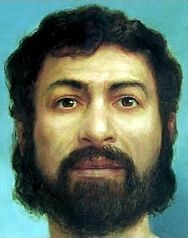
JewishJesus

I don’t usually talk much about religion here–occasional bits of Asatru but that’s about it.  Still, this point has come up recently so I wanted to discuss a bit of philosophy.

Jesus (Yeshua Ben Yoseph as he would have been known at the time) is reported to have said: “I am the Way, the Truth, and the Life.  No one comes to the Father but through Me.” This is generally interpreted to mean that one has to be a Christian, a believer in Jesus Christ as described in whichever Christian religion is making the claim.

Consider, however, we live on an Earth 12,756 km in diameter, with a surface area of 510 million square kilometers.  It is one of nine planets (8?  Is Pluto back to being considered a planet again?) circling a G class star (and not counting any planets out farther that might yet be found circling our sun). The sun is just one star out of something between 100 to 400 billion stars in the Milky Way galaxy.  The Milky Way is but one galaxy, which itself is but one of two trillion galaxies.  That, then would mean something like two to eight hundred sextillion stars with possibly septillions of planets.

This is all scattered over tens of billions of light years, sextillions of kilometers.

It’s one thing to write out the numbers, but it’s quite another to actually comprehend what it means.  A single grain of sand might be a half millimeter in diameter.  A billion grains of sand, close packed, would make a ball 22 centimeters in diameter.  Not bad.  A trillion is two meters in diameter.   Still not too bad.  A sextillion is 2.2 kilometers in diameter and an octillion is 22 kilometers in diameter.  All that as grains of sand.

And out of all that, on this one planet, the fall of each and every of the tens of millions of sparrows on just this one planet , along with every other creature here and throughout that incomprehensibly vast universe is noted, in real time, as it happens.

Such a being, if He exists, must Himself be far vaster, far more expansive than we can possibly comprehend.  Indeed, that must be true of any deity, whether the Christian God, or any other god or group of beings that we might call “gods”, that are a significant force in all that vastness (let alone an ultimate creator god).  Such a being would have to beggar our human understanding.  Any human conception of such a being or beings would be, at best, no more than one grain of sand in that 22 kilometer diameter ball.

There is the parable of the blind men and the elephant.  But that dwarfs the situation.  Six blind men touching some random thing in the world would be closer.  One touches a puddle and thinks it’s wet.  Another a fire and that it burns.  Another steps off a cliff and…briefly…thinks it’s rushing air.  All of them have only the tiniest, the most minuscule, picture of the whole, and don’t even know how limited their view is.  They think it is the world.

And so perhaps, just perhaps, even if we grant the opening statement as true, perhaps “by Me” itself encompasses far more than we can possibly imagine.

Gaslighting

So there was this:

83576927_10156557286122063_74901785805848576_n

We’ve seen similar things before.  The claim that the 2nd Amendment was originally to allow government-run “militias” and did not, in any way, refer to an individual right to keep and bear arms (this latter I have dispensed with before).

And we get told a whole variety of things.  The primordial “matriarchy” where women ruled in peace and goodness before those evil men took over.  The “noble savage” of primitive societies living in harmony with nature and, again all peace and goodness.  People of color living in universal benevolence until those evil White Men came and upset their applecarts.

It’s all crap.  None of it has a lick of basis.  Matriarchal societies may have existed but they were neither common nor particularly peaceful (or if they were they did not last long–the Gods of the Copybook Headings will not be denied).

There is a common tendency, however, to dismiss these various claims as “stupid.” They’re not.  They’re far worse than that.  They’re a deliberate attempt to paint a picture, to change history from what really happened to what suits the narrative of the ones seeking power over us.  They’re the kind of thing expressed in 1984 with “The past was alterable. The past never had been altered. Oceania was at war with Eastasia. Oceania had always been at war with Eastasia.” (George Orwell, 1984)

It’s gaslighting.  It’s the deliberate attempt to change our perception of the past so as to dictate the future the proponents of that change want.  It’s “Who controls the past controls the future. Who controls the present controls the past” (again George Orwell, 1984)

It’s not stupid.  It’s deliberate evil.

Fortunately, gaslighting only works when there’s no challenge to it.  It only worked in 1984 because there was no challenge to it and anyone who really questioned it (like Winston Smith) would be subject to “extreme measures” until they, too, accepted it.

For a long time, that was true in the US.  The media were all in lockstep pushing a particular narrative while pretending to be simply impartially presenting the news.  Education and entertainment had similarly been captured by the purveyors of that singular narrative (the mere fact that anyone would be willing to give Zinn and his “people’s history” the time of day demonstrated that).  We were being fed a continuous stream that ranged from “spin” to outright lies all in the interest of furthering a Leftist political agenda.

And when people, through their personal knowledge of some issue or other–someone who actually fought in the “Tet Offensive” and knew that it was a decided American and South Vietnamese victory, someone who actually spoke with Soviet ex-pats and knew just how horrible the Soviet Union was, and so forth–well Gell-Mann Amnesia is a thing.  Without other channels for widespread data dissemination, such individuals could easily think they’re alone (much like Paula Anton in Gaslight) and maybe it’s they who are wrong rather than everyone else.

More recently, however, with the rise of New Media (including, in its own humble way, things like this blog) the monopoly of the left on information dissemination has started to crack.  The Left, too, can use New Media, as demonstrated in the captured image of Hogg’s tweet up top.  However, what they cannot do, despite their best efforts, is shut down challenges to their fictitious narratives.  People can point and laugh, publicly, at Hogg’s risible claim (and it is risible; the history of gun control has been to keep guns out of the hands of “those people”–blacks, American Indians, whoever the discriminated against of the day had been–and it’s the disadvantaged people who were trying to level things by seeking arms for themselves).  Sure, Facebook can block posters who challenge the narrative too broadly, and being in “Facebook Jail” has become a badge of pride for many.  Google can play tricks with search results to make challenges to Leftist dogma more difficult to find, or to be lost in a sea of nonsense, where the real criticisms are mixed in with a multitude of “tin foil hat” nonsense (which, I’m sure, some will claim this post to be).

But, the Internet treats censorship as damage and routes around it.  More and more people are using alternate platforms like MeWe and alternate search engines like DuckDuckGo.  The numbers may be small relative to the giants, but they’re growing.

And the narrative, the gaslighting, is crumbling.

Odin/Woden/Wotan

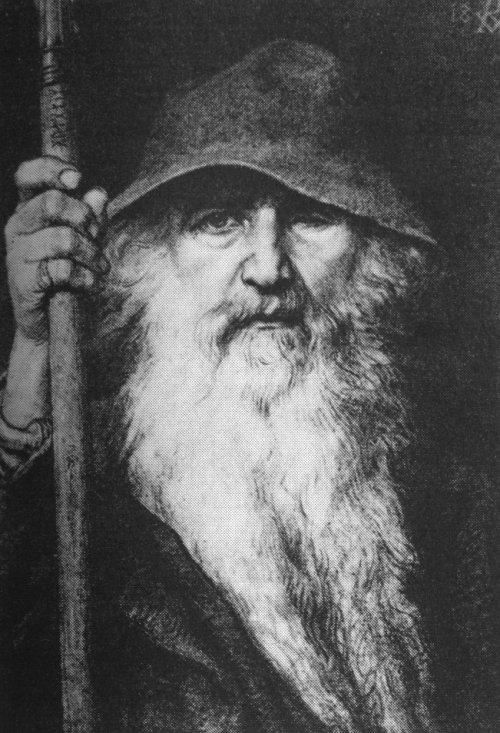
Georg_von_Rosen_-_Oden_som_vandringsman,_1886_(Odin,_the_Wanderer)

Odin, also known as Woden or Wotan, is, perhaps, the most complicated figure in Germanic/Norse mythology.  This is fitting for the one with such a long list of “kennings“, alternate names used in Norse/Germanic poeetry to refer to him.

Traditionally styled as the ruler of the Gods, at least in the later myths which have come down to us thanks to Snorri Sturluson and the unknown compiler of the Elder Edda (which, despite its name, was written about 50 years after the Younger Edda of Snorri Sturluson.  Fragments of earlier tales suggest, however, that this may be a later addition and that the hierarchy suggested of a single ruler was not always the belief of the peoples who worshiped those gods.

Quick note:  This is my understanding, where I am now.  As always, it’s subject to revision as I learn more.  For those who are actually believers (and I know a few) let me just say that any gods that might exist have not chosen to make themselves known to me.  I am left with merely my own wit and what I can glean from others to try to understand the world around me.

Most of the pagan deities of antiquity (as opposed to modern “neopagan” religions) do not depict their deities as being particularly virtuous as we would understand the term today.  “Justice” often has little to do with them, let alone terms like “loving” and “merciful.” If, indeed, one is referred to in such terms, it is usually in the hopes not of evoking their kindliness, but of averting their wrath through propitiation–examples in Classical mythology are referring to Zeus as “Zeus the Soother” or the Erinyes as “the kindly ones.” So, too, was it with Odin.

Unlike Classical Mythology, the Norse gods did not serve so much as patrons of different spheres of activity–Hephaestus of craftsmen, Hermes of thieves, Aphrodite of “love” (really “lust”), Hestia of the hearth, and so on.  There were some hints of that, Thor as a storm god being primary there, but the association with different human activities and realms was not so strong.  This can be confusing for people coming to Norse/Germanic after learning Classical mythology and often leads to trying to force Norse (I’m not going to keep repeating “Norse/Germanic”) Gods into being patrons of this or that or representing that or this.  The Norse deities were, first and foremost, personalities as opposed to patrons  Like human personalities, they’ll have different strengths and weaknesses, but that’s not the same as the classical patronage/representation.

Odin was known for wandering the world.  And, like Zeus of Classical Mythology, is purported to be the father of many lines of rulers.  He is known for making deals and then finding, or manufacturing, reasons for breaking them.  He sets young men on the course of becoming great warriors and heroes (in the classical sense of those who do great deeds) and then turning on them, leading to their downfall.

Odin is a grim character throughout.  His most common emotional state is brooding.  But then, in his own words (as reported in the Havamal):

54.
Wise in measure let each man be;
but let him not wax too wise;
for never the happiest of men is he
who knows much of many things.

55.
Wise in measure should each man be;
but let him not wax too wise;
seldom a heart will sing with joy
if the owner be all too wise.

56.
Wise in measure should each man be,
but ne’er let him wax too wise:
who looks not forward to learn his fate
unburdened heart will bear.

Clearly, the one known as “Most Wise” will not exactly be a happy individual.

Much of Odin’s character becomes a lot more comprehensible once you recognize two things:

  1. Odin is attempting to prepare for Ragnarok.  He is amassing the army to fight against the giants in the final battle at the end of days.  This means puissant warriors, and a lot of them, all at the height of their prowess.
  2. Unlike everyone else in the Nine Realms, Odin has hope that there might yet be some way to avoid the predicted outcome of that Ragnarok.  Thus he is always seeking “Wisdom” (a term applied much more broadly in the Eddas than the modern word implies, including such things as knowledge and prophecy).
    1. Traditionally, Odin is considered to be wrong here.  Odin’s fate remains despite all his attempts to avoid it.  However, from the position of one inside that belief structure, this certainty may not be justified.  Ragnarok, after all, has not yet occurred.  The sequence of events that Odin is attempting to forestall have not played out.  And if any being in the nine worlds can suss out a way to redirect those events and avoid the prophesied end it would be Odin.

So, from the first of those principles, we see Odin setting individuals on paths to becoming great warriors of renown, even giving them counsel along the way.  And then, when they are at the height of their prowess and strength, he will turn on them, leading to their death. An example of this is the Volsung Saga where Odin through a “sword in the tree” event (much like the Arthurian “sword in the stone”, only it’s ownership of the sword rather than kingship that is the prize) gives a fine sword to Sigmund.  Later, Odin breaks the sword while Sigmund is using it in battle, leading to his death.  In so doing, Odin gains a new warrior for Valhol, who will continue to train in neverending youth and strength for the final battle of Ragnarok.

Both the initial aid and the ultimate betrayal clearly fall out of that first principle.  Odin is amassing an army and creating heroes, then killing them at their pinnacle, is his recruiting, conscripting, a draft from which there is no evasion.

From the second principle we see the many things Odin will do to gain Wisdom.  He will engage in “question duels” with giants, as in Vafþrúðnismál with his head (as in removal thereof) as the stakes.  Yes, he cheated on that one, to ensure that the giant lost.  On the other hand, Vafþrúðnir didn’t consider it “cheating” so much as extreme wisdom:

You alone know that, what long ago
You said in the ears of your son.
I doomed myself when I dared to tell
What fate will befall the gods,And staked my wit against the wit of Odin,
Ever the wisest of all.
Vafþrúðnismál 55, translated by Auden and Taylor

That he’s truly willing to put himself on the line seeking that wisdom, is demonstrated by his hanging nine days in the World Ash, Yggrassil, thrust through with a spear in order to learn the secret of the runes.  Note that the runes were not just a writing system (although they were that) but were used for magic and divination.  In another case, he plucked out his own eye in order to get a drink from Mimir’s Well and gain the wisdom possessed therein.  Against these, seducing a giantess to obtain the Mead of Poetry (another source of magic) is a minor thing indeed.

Odin is a force for creation.  It is Odin with his brothers who, after the slaying of the primordial giant Ymir, created Midgard from his remains.  It is Odin with his brothers (although some sources say with Hoenir and Lodur, and some folk associate Lodur with Loki) who created the first man and woman.  As such, he is opposed to the final destruction of the Nine Worlds (even though that destruction leads to a rebirth).  His efforts are bent toward the twin goals of building his strength to fight the last day and in seeking ways to avoid that final fate, both his personal fate (being devoured by Fenrir) and that of the world (burned by Surt).

And the question, of who will win in that final day, is still very much open.


One Year

A year ago I started getting serious about trying to get better physically.  It had been several months since I’d finalized my divorce (Final October 25, 2018).  I was in pretty much the deepest funk of my life.  As I have mentioned in the past, I grew up in a religion that believed that marriage was supposed to be forever, not just “until death do you part” but “for time and all eternity”.  The very idea of “heaven” was a continuation of an ideal, loving family.

And while I’m no longer a believer, that emotional imprinting stuck.  So the failure of the marriage (regardless of any “fault” involved) hit me like a personal failing.  Add in that my health was “meh” at best.  I was pushing 270 lbs (at 5′ 9″–that’s 122.5 kg and 175-176 cm for your metric folk).  I kept my shoes loosely tied so I could just slip them on and off like loafers rather than having to bend over to deal with them.  I tired easily.  My feet hurt when I was on them for more than a few minutes, even with custom orthotics.

Here’s a picture from 2017 which gives you some idea of what I looked like (I was experimenting with “Viking Goth” so the makeup and the outfit):

2017

However, at that time a couple of things had happened.  First, my daughter had taken up ice skating.  It was something I had done back when I was 18 or so and I thought I’d be able to show her a couple things and see if she likes it before committing to a class (which would mean $$$).

Oh, was I so wrong.  As I have mentioned before, ice skating is not like riding a bicycle.  I ended up on my rear end, at least half a dozen times making just one lap around the rink.  It was bad.  I would fall…a lot.  And falls hurt a whole lot more than when I was younger.  I got stubborn, though, and decided there was just no way I was going to give that up.  Not going to happen.  No way, no how.  I used to have fun at this and I was damned if I was going to let it beat me now.

So we got my daughter into her classes.  And during the public skate session, I struggled along on the ice with her.

Then, a scheduling conflict arose between her ice skating classes and another activity.  We looked around for an alternative and found it at Fuel Tank at Fishers (Indy Fuel Tank).  They had classes on a different day of the week which resolved the schedule conflict.  But they also had something else.  They had adult classes.  And, since the age for “Adult” started at 15 (with my daughter 14 turning 15 that year) we could take our classes at the same time.

Oh, I was so there.

So I started in “Adult One”.  My daughter started in “Adult two” or “Adult three”, something like that.  But I was getting on that ice.  Now, I mentioned foot pain up above?  Well, it was worse, a lot worse, in ice skates.  I ended up spending 2/3 or so each class just sitting trying to let the pain subside.  I’d skate across, doing whatever we were doing in that class, then stop and rest.  Try again.  Rest again.  And in public skate?  Once, maybe twice, around the rink, stopping halfway each time to rest.

Before I even got on the ice, simply bending over to try to lace and tighten the skates compressed my gut to the point where I. could. not. breathe.  I had to bend over, lace one or two hooks, sit up, breathe, and repeat until I got the skates on.  It was pure misery.

But I can be…stubborn.

I kept at it.  I added other exercises at home.  Throughout the day I’d take a minute or two to do an exercise:  pushups, squats, a sort of half-squat where I’d keep my back strictly upright (mimicking posture for skating), etc.  The calendar on my phone numbers the weeks.  And that’s what I used as a guide.  Whichever “number” the week was, that was the number of reps I did.  Week ten, ten reps.  Week 11, 11 reps.  And so on.  The progress is modest, certainly, but inexorable.  After all, there are 52 weeks in a year.

I also started working on my diet.  I kept a food diary, a comprehensive one.  I also set goals.  I do a mostly keto diet these days.  I say “mostly” because I don’t worry much about “clean” vs. “dirty” fats or “free range” or whatever other stuff people come up with looking for some magic formula.  No, I simply set target levels of what they call “macros”–protein, fats, and net carbohydrates (that’s total carbs minus the indigestible ones–fiber, sugar alcohols, that sort of thing that don’t provide calories).  I started modest in terms of reducing carbohydrates, 50 g per day.  Later I reduced that to 20-30.  Protein appropriate for my activity level (and I may need to adjust that) and enough fats to provide my target calories for the day.

And it worked.  The weight has been coming off, quickly at first, then tapering off a bit later.  My energy level is up.  The foot pain is mostly gone (a bit during skating, but nowhere near as bad as it was.  During public skate I do more than an hour of solid skating.  I not only take my half hour class without having to stop, before that I help teach the kids in the “Snowplow Sam” classes.

My health is better.  My blood pressure is down.  The episodes of shortness of breath I used to have (and, indeed, had had for years) have mostly gone away.  Here’s what I look like now (201.6 lbs, that’s 91.4 kg to you metric folk).

2020a

On the whole, it’s been a pretty good year.